

A recliner sofa can be more than a comfortable place to watch TV. By changing the angle between your torso, hips, and legs, a well-designed recliner can redistribute body weight, support the lumbar region, and reduce the need to hold your trunk upright with constant muscle activity. For people who spend long periods relaxing at home, these features can make a meaningful difference in everyday comfort.
But are recliner sofas actually good for your back?
They can be, but the answer depends on the recliner's design, your body, your back condition, and how you use it. A recliner is not a treatment for back pain, and simply reclining as far as possible does not guarantee better spinal support. The most useful recliner is one that lets you maintain a comfortable, supported posture while changing positions throughout the day.
Research into spinal loading helps explain why reclining can feel better than unsupported sitting. Early intradiscal-pressure studies by Alf Nachemson demonstrated that lumbar disc loading changes substantially according to body position, while later research has shown that reclined sitting changes spinal posture and can provide more opportunities to vary position.
For shoppers, the practical question is therefore not simply whether recliners are "good" or "bad" for your back. It is which recliner provides the right combination of lumbar support, seat geometry, adjustability, and ease of movement for your everyday needs.

Source Homary
The Scientific Truth Behind Recliners and Back Pain Relief
The main reason a recliner can feel easier on the lower back is mechanical: reclining changes how your body weight is distributed and how much work your spine and supporting muscles have to do to maintain an upright position.
When you sit upright without adequate back support, your pelvis and lumbar spine have to help stabilize your upper body. As the backrest reclines, part of the upper-body load is transferred into the backrest. Your thighs and legs can also receive support when the footrest is raised, reducing the feeling that your lower back has to "hold" your body in place.
This is related to the concept of spinal decompression, although that term should be used carefully. Reclining does not literally pull the vertebrae apart or cure a compressed disc. Rather, changing posture can reduce certain types of loading and redistribute pressure across the spine.
What Nachemson's research tells us
Nachemson's pioneering lumbar intradiscal-pressure research measured pressure inside lumbar discs in living subjects and demonstrated that disc loading varies according to posture and activity. Later measurements by Wilke and colleagues similarly showed that spinal loading varies substantially between different everyday positions.
Importantly, modern research also shows why simple statements such as "sitting is always bad for your back" are too broad. A 2022 systematic review and meta-analysis found that sitting was associated with higher lumbar intradiscal pressure than standing in normal discs, but the authors noted that more recent studies did not consistently support this difference, particularly in people with degenerated discs.
That means the goal should not be to find one supposedly perfect posture. The better strategy is to reduce prolonged static loading and have enough support and adjustability to change position comfortably.
Why a reclined position can feel more supportive
A good recliner can provide several forms of mechanical assistance:
Recliner feature | Potential benefit for your back |
Reclining backrest | Moves the torso away from a fully upright position and transfers more load into the backrest |
Adjustable lumbar support | Helps fill the natural curve of the lower back |
High backrest | Supports more of the thoracic and upper back |
Raised footrest | Supports the legs and may make a reclined posture feel more balanced |
Independent back and footrest adjustment | Allows you to fine-tune your individual posture |
Padded but supportive seat | Helps distribute pressure without allowing excessive sinking |
Power adjustment | Makes small posture changes easier throughout the day |
The term zero gravity recliner is often used for positions in which the back and legs are elevated to distribute body weight more evenly. This position may feel particularly relaxing because it reduces the sensation of carrying your upper body entirely through the pelvis and lower back. However, zero-gravity positioning should be viewed as a comfort and positioning feature rather than a medically proven treatment for back pain.
Research on reclined seating also supports the value of adjustability. A study examining upright and reclined sitting found that changing the backrest angle altered spinal posture, with the researchers suggesting that dynamic seating may help reduce problems associated with prolonged static sitting.
The key takeaway: a recliner may reduce discomfort by supporting your body in a different posture, but its value comes from appropriate support and position changes—not simply from reclining as far as possible.
Is a Recliner Right for Your Specific Back Condition?
There is no universally correct recliner position for every type of back problem. Different conditions can respond differently to spinal flexion, extension, hip position, and prolonged sitting.
If you have diagnosed spinal disease, significant radiating pain, numbness, weakness, or have recently had surgery, your physician or physical therapist should determine the safest position rather than relying on a generic recliner recommendation.
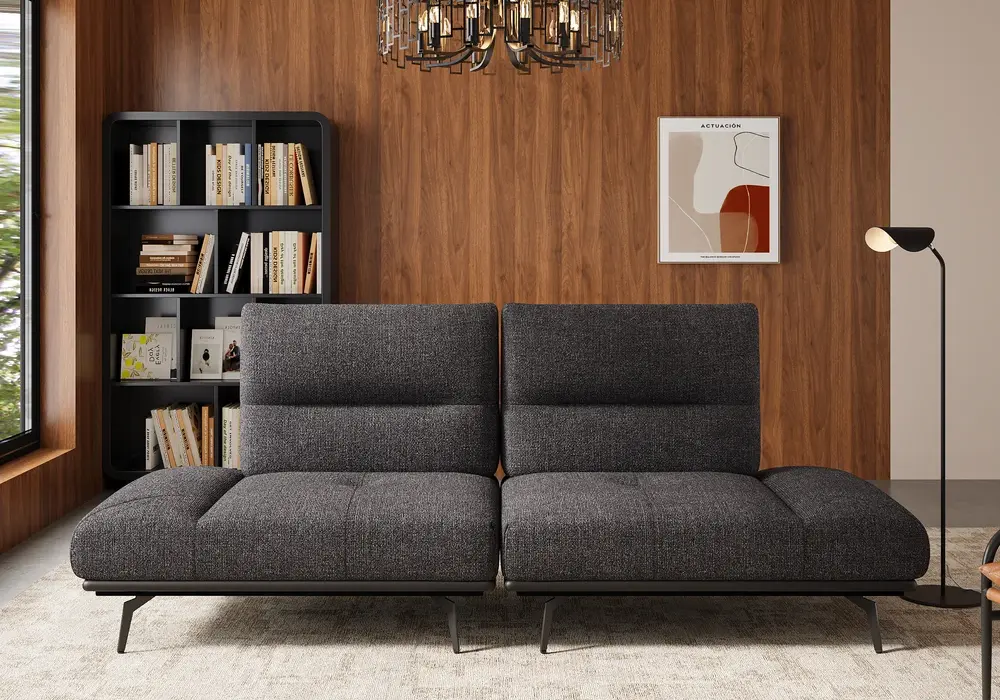
Source Homary
Sciatica
Sciatica involves irritation or compression of a nerve root that can cause pain traveling from the lower back into the buttock and leg. Because the underlying causes vary, there is no single recliner angle that works for everyone.
For some people, a moderately reclined position with good lumbar and pelvic support may be more comfortable than sitting upright. The important point is to avoid a position that consistently increases leg pain, tingling, or numbness.
A recliner with independent backrest adjustment and adjustable lumbar support is therefore generally more useful than one with only a fixed reclining position.
Herniated or bulging disc
People with a herniated disc often experiment with reclining because upright sitting can feel uncomfortable. However, the ideal position depends on the location of the disc problem and the individual's symptoms.
A slight-to-moderate recline with the lumbar region supported may be more comfortable than slouching deeply into a soft sofa. Avoid choosing a recliner simply because it reaches the deepest angle.
If a particular position increases leg symptoms or causes new numbness or weakness, stop using that position and seek professional guidance.
Lumbar spinal stenosis
Lumbar spinal stenosis is different because symptoms are often aggravated by standing or walking and relieved by sitting or forward flexion. Clinical guidelines describe symptom relief in sitting and flexed positions as a characteristic pattern in many people with lumbar spinal stenosis.
For this group, a recliner that allows a comfortable, slightly flexed posture may be preferable to one that forces the lumbar spine into a strongly extended position.
This is a good example of why "more reclining" is not automatically better. A shopper with spinal stenosis may prioritize a supportive seat and controlled hip/trunk positioning over an extreme recline angle.
Back muscle strain
For temporary muscular soreness or fatigue, a recliner can provide a comfortable way to reduce the amount of effort required to maintain an upright sitting posture.
Here, comfort and adjustability are especially important. A moderately firm cushion, supportive backrest, and adjustable footrest can make relaxation easier without forcing the body into one position for an extended period.
After back surgery
Post-surgical seating requires extra caution. A recliner may make sitting down and getting up easier and can provide a convenient supported resting position, but the appropriate angle depends entirely on the procedure and the surgeon's instructions.
For someone recovering from surgery, features such as power reclining, a stable frame, easy-to-reach controls, and a supportive seat height can be more important than having the deepest possible recline.
Back concern | Recliner characteristics to prioritize | What to avoid |
Sciatica | Adjustable lumbar support, moderate recline, easy position changes | Positions that increase leg symptoms |
Herniated disc | Supportive lumbar area, controlled recline | Deep slouching or symptom-provoking angles |
Spinal stenosis | Comfortable flexion-friendly positioning, supportive seat | Forced lumbar extension |
Muscle strain | Cushioned support, adjustable footrest, moderate recline | Extremely soft cushions that allow excessive sinking |
Post-surgery | Power adjustment, stable frame, easy entry/exit | Choosing a position without surgical guidance |
How to Shop for a Back-Friendly Recliner
When shopping for a recliner sofa, think about support before appearance and adjustability before maximum recline.
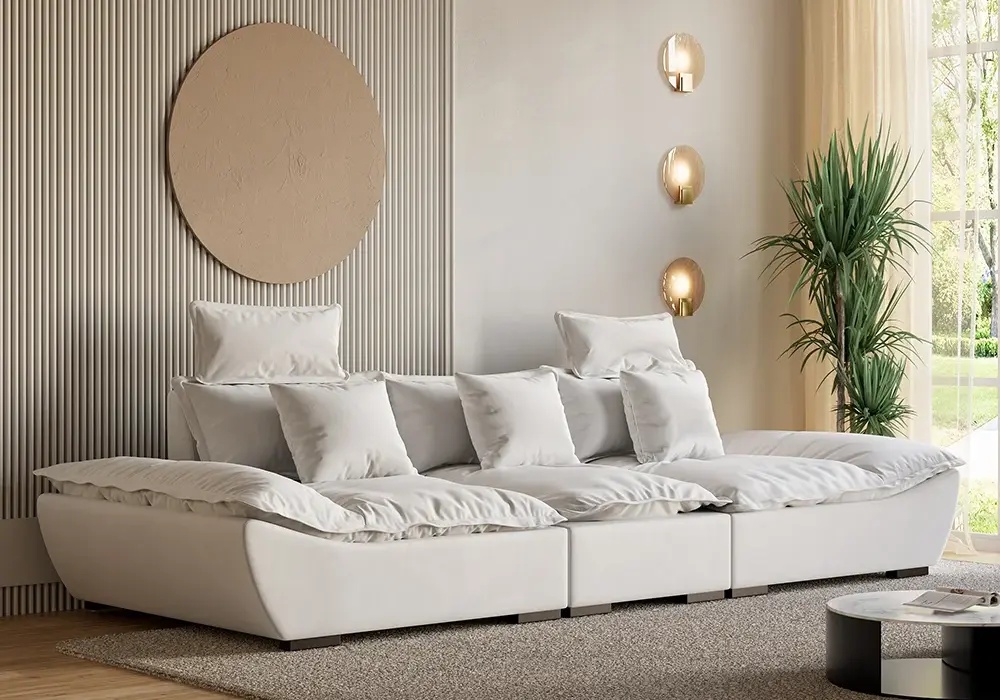
Source Homary
Manual vs. power recliners
A manual recliner can provide excellent support if its geometry fits your body. It is often simpler and can be less expensive.
A power recliner, however, gives you much finer control over the backrest and footrest. This can be especially useful if you regularly change positions or need to find a very specific angle that feels comfortable.
For back support, the important distinction is therefore not "manual versus electric" by itself. It is how precisely the chair allows you to position your body.
Wall-hugger vs. standard recliner
A wall-hugger recliner is designed to recline while requiring less clearance behind the chair. This is primarily a space-saving feature, not a direct back-health advantage.
However, the compact mechanism should not come at the expense of seat depth, lumbar support, or backrest height. Always evaluate the actual sitting geometry rather than assuming that a particular mechanism is more ergonomic.
Recliner vs. lift chair
A lift recliner is designed to assist the user when standing up by raising and tilting the seat. This can be valuable for people who find conventional sit-to-stand movement difficult.
For everyday back comfort, however, lift capability alone does not make a chair more supportive. Look for lumbar support, appropriate seat height, stable armrests, and easy controls as well.
What to test in a showroom
Before buying, spend several minutes sitting in the recliner rather than testing it for only a few seconds.
Check whether:
- Your feet can rest comfortably when the footrest is closed.
- Your lower back remains supported rather than falling into a hollow gap.
- Your shoulders and upper back contact the backrest.
- Your head is supported without being pushed unnaturally forward.
- Your knees are comfortable when the footrest is raised.
- The seat is supportive without feeling like a rigid board.
- You can change positions without straining your back.
- The armrests allow your shoulders to remain relaxed.
- The controls are easy to reach.
- You can get in and out without twisting or using excessive force.
Seat and backrest design can have measurable effects on spinal posture and comfort. Research on backrest configurations has found that supplemental back support can alter pressure distribution and lumbar posture, although comfort does not always correspond perfectly with biomechanical measurements.
Does a more expensive recliner provide better back support?
Not necessarily.
Price can reflect better mechanisms, higher-density cushioning, stronger frames, premium upholstery, power controls, and more adjustment options, but a $2,000 recliner is not automatically better for your spine than a $700 model.
The better purchasing question is:
Does the chair provide the specific support and adjustability your body needs?
For a high-use recliner sofa, investing more may make sense if it gives you substantially better lumbar adjustment, smoother positioning, more durable cushioning, or a better-fitting seat. Those benefits can matter more over years of daily use than decorative details.
Back-Friendly Recliner Buying Checklist
Priority | What to look for |
Essential | Good lumbar and full-back support |
Essential | Seat depth that fits your body |
Essential | Supportive rather than excessively soft cushioning |
Highly useful | Adjustable backrest and footrest |
Highly useful | High backrest with head support |
Highly useful | Easy-to-use power controls |
Optional | Adjustable lumbar intensity |
Optional | Zero-gravity preset |
Optional | Heat or massage functions |
Tips for Using a Recliner Without Hurting Your Back
Even the best recliner can become uncomfortable if you remain motionless in it for hours.
The human body generally responds better to movement and position changes than prolonged static posture. Research on sitting has repeatedly highlighted the potential problems associated with prolonged static positioning, while studies of adjustable seating suggest that changing posture can alter spinal loading and alignment.
Change your angle regularly
You do not need to maintain one "perfect" recline angle.
For example, you might sit relatively upright while reading, recline moderately while watching television, raise the footrest during a short relaxation period, and then stand up and walk around before returning to the chair.
This creates a more dynamic pattern instead of keeping your lumbar spine in exactly the same position.
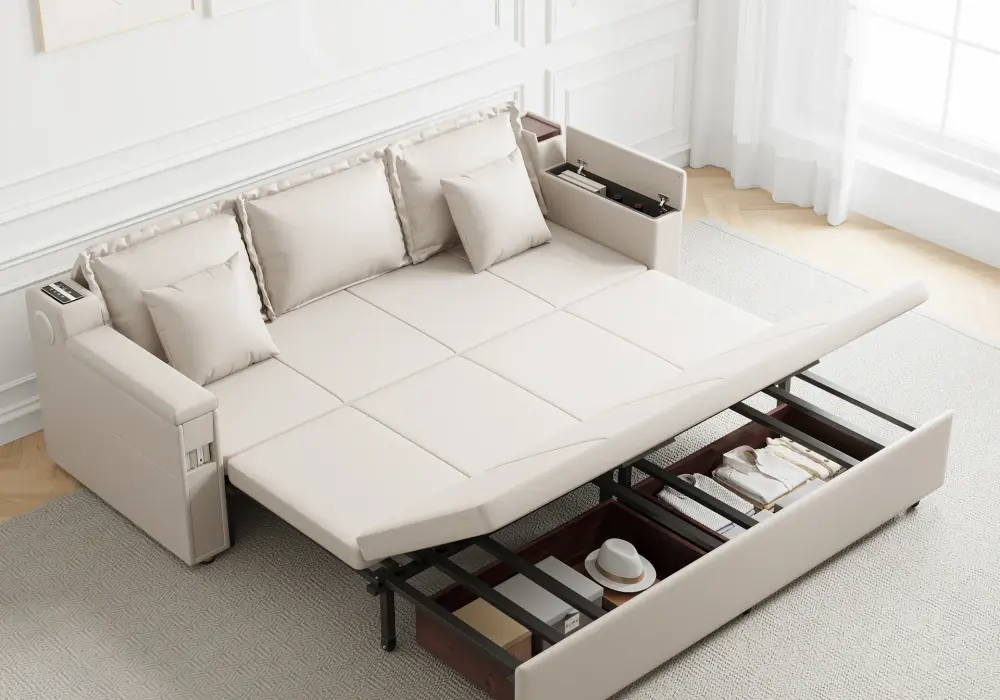
Source Homary
Sit down without twisting
When entering the recliner, approach it squarely, back up until you feel the seat behind your legs, and lower yourself using the armrests if necessary.
Avoid dropping heavily into the cushion or twisting your torso while sitting.
When standing, bring your feet underneath you, lean your torso forward enough to shift your center of mass, and use the armrests for assistance if needed.
Try gentle movement while reclined
If comfortable, simple movements such as ankle pumps, gentle shoulder rolls, or small changes in pelvic position can help prevent stiffness.
Do not force lumbar stretching inside the recliner. If an exercise produces sharp pain, radiating symptoms, numbness, or weakness, stop.
The goal of a recliner is to make everyday relaxation easier—not to turn the chair into a substitute for physical therapy.
Recliner vs. Other Seating: What's Safest for Your Spine?
A recliner is not automatically the healthiest chair for every activity. The best seating depends on what you are doing.
Seating type | Best use | Back-support strengths | Main limitation |
Recliner sofa | TV, reading, relaxing | Adjustable posture, lumbar and leg support | Not ideal for prolonged desk work |
Regular sofa | Socializing, casual sitting | Spacious and comfortable | Often less adjustable |
Lift recliner | Resting and easier standing | Supportive recline plus assisted exit | Bulkier and usually more expensive |
Zero-gravity chair | Relaxation | Strong body-weight redistribution | Less versatile for normal sitting |
Ergonomic office chair | Working | Adjustable lumbar, seat and back support | Designed for upright tasks rather than relaxation |
Recliner vs. regular sofa
A regular sofa can be comfortable, but many sofas provide limited control over lumbar support and seat angle. Deep, soft cushions can also encourage the pelvis to roll backward and the torso to slump.
A recliner gives you more control over your position, which can be an advantage for people who frequently experience discomfort during conventional sitting.
Recliner vs. ergonomic office chair
For working at a computer, an ergonomic office chair is generally more appropriate because it is designed around desk height, screen positioning, arm support, and sustained upright tasks.
A recliner is better suited to activities such as reading, watching television, listening to music, or relaxing after work.
Trying to turn a recliner into an all-day workstation is usually not the best approach.
Do back cushions make a difference?
A lumbar cushion can improve the fit of a sofa or chair by filling the space between your lower back and the backrest. Research has shown that adding lumbar support can change spinal posture and pressure distribution, although improved posture does not automatically mean reduced pain for every person.
A cushion is therefore useful when the underlying chair is reasonably supportive but simply does not fit your lumbar curve.
If the sofa is excessively deep, extremely soft, or has poor seat geometry, however, a small cushion may not fully solve the problem.
When is a medical-grade support chair worth considering?
If you have persistent or severe back symptoms, neurological symptoms, or specific post-surgical restrictions, specialized seating may be worth discussing with a physician or physical therapist.
For most healthy shoppers looking for comfortable everyday relaxation, however, a well-designed residential recliner with good support and adjustability is often a more practical choice than buying a chair solely because it is marketed as "medical."
How to Choose the Best Recliner for Everyday Back Comfort
If your main goal is to relax without aggravating your back, prioritize these factors in order:
- Fit: The seat depth, height, backrest and headrest should match your body.
- Lumbar support: Your lower back should feel supported rather than suspended in a gap.
- Adjustability: The ability to fine-tune the backrest and footrest is more useful than having a single dramatic reclining position.
- Cushion support: Look for cushioning that is comfortable but does not allow your hips to sink excessively low.
- Ease of movement: A chair should make it easy to sit down, change positions and stand up.
- Long-term construction: If you expect to use the recliner every day, durable foam, a strong frame and a reliable reclining mechanism can justify a higher purchase price.
Most importantly, choose based on how your body feels after several minutes in the chair, not just how attractive it looks in a showroom photograph.
A Recliner Can Support Your Back—But It Shouldn't Replace Movement
So, are recliner sofas good for your back?
For many people, yes. A properly fitted recliner can provide better support and more comfortable positioning than an unsupported sofa, particularly during short periods of relaxation. Reclining can redistribute body weight, provide back and leg support, and make it easier to vary posture.
But the evidence does not support treating recliners as a universal solution for back pain. Spinal loading is complex, and different conditions can respond differently to flexion, extension, and sitting positions. Modern research also suggests that posture should not be evaluated in isolation; movement, individual anatomy, symptoms, and duration all matter.
If you are shopping for a recliner sofa, focus on fit, lumbar support, adjustability, and ease of movement rather than simply choosing the chair with the deepest recline.
And if you already have a diagnosed back condition, particularly after surgery or when pain travels into the legs, consult your spine specialist or physical therapist before relying on a particular reclined position.
Ready to Choose a Back-Friendly Recliner?
A comfortable recliner should make everyday relaxation easier without encouraging you to stay completely still all day. When comparing options, look for supportive cushioning, a well-shaped backrest, adequate lumbar support, adjustable reclining positions, and a seat that fits your body.
If you are unsure which configuration is appropriate for your back condition, professional advice from a physician or physical therapist is the safest next step. For general shoppers, comparing back-friendly recliner designs based on support, adjustability, dimensions, and intended use can help you find a model that feels comfortable today and remains practical for daily relaxation over time.
FAQ
Are recliner sofas actually good for your back?
Yes, a properly designed and correctly fitted recliner sofa can be good for your back because it supports the torso, redistributes body weight, and allows you to change your sitting angle. However, a recliner is not automatically better than every sofa, and it should not be considered a treatment for back pain.
What do doctors and spine specialists say about using recliners for back pain?
Medical advice generally depends on the underlying cause of the pain. A recliner may provide a comfortable supported position, but there is no single recline angle that is appropriate for everyone. People with diagnosed spinal conditions or post-surgical restrictions should follow individualized guidance from their physician or physical therapist.
Can sleeping in a recliner help or worsen back pain?
Sleeping in a recliner may feel comfortable for some people, but prolonged sleeping in one position can also cause stiffness or discomfort. A recliner should not automatically be considered a better sleeping surface than a properly designed bed. If you regularly need to sleep in a recliner because lying flat is painful, discuss the underlying issue with a healthcare professional.
Which type of recliner is best for a herniated disc or sciatica?
There is no universally best model. For many people, a recliner with adjustable lumbar support, a moderate reclining range, and independent footrest adjustment provides more opportunities to find a comfortable position. Avoid any angle that consistently increases leg pain, numbness, or tingling.
Is a recliner better than a regular sofa for your back?
It can be. Recliners offer adjustable back and leg positioning that most regular sofas do not. This can make it easier to maintain a supported posture. However, a well-designed regular sofa can also be comfortable if its seat depth, firmness, and back support fit your body properly.
How should you sit in a recliner to relieve back pain?
Keep your lower back supported, allow your shoulders and upper back to rest against the backrest, and use the footrest when it improves comfort. Avoid excessive slouching or forcing yourself into a specific angle. Most importantly, change positions regularly rather than remaining completely still for hours.
Can using a recliner too much cause back problems?
It can contribute to stiffness or discomfort if you spend long periods in one position without moving. The issue is not necessarily the recliner itself but prolonged static posture. Use the chair as a place to relax, change positions frequently, and stand or walk periodically throughout the day.