

A weather resistant outdoor sofa should balance durability, comfort, appearance, and maintenance. The right choice depends on where you plan to use it, how much exposure it will receive, and how you want to care for it over time.
A sofa on a covered porch has different needs from one placed beside a pool or on an uncovered patio. Frame materials, cushion construction, fabric performance, and furniture design all influence how well a sofa suits its environment.
Rather than choosing based on a single durability label, compare these features as part of the complete furniture setup. Understanding what each material offers will help you find an outdoor sofa that fits your space and everyday routine.
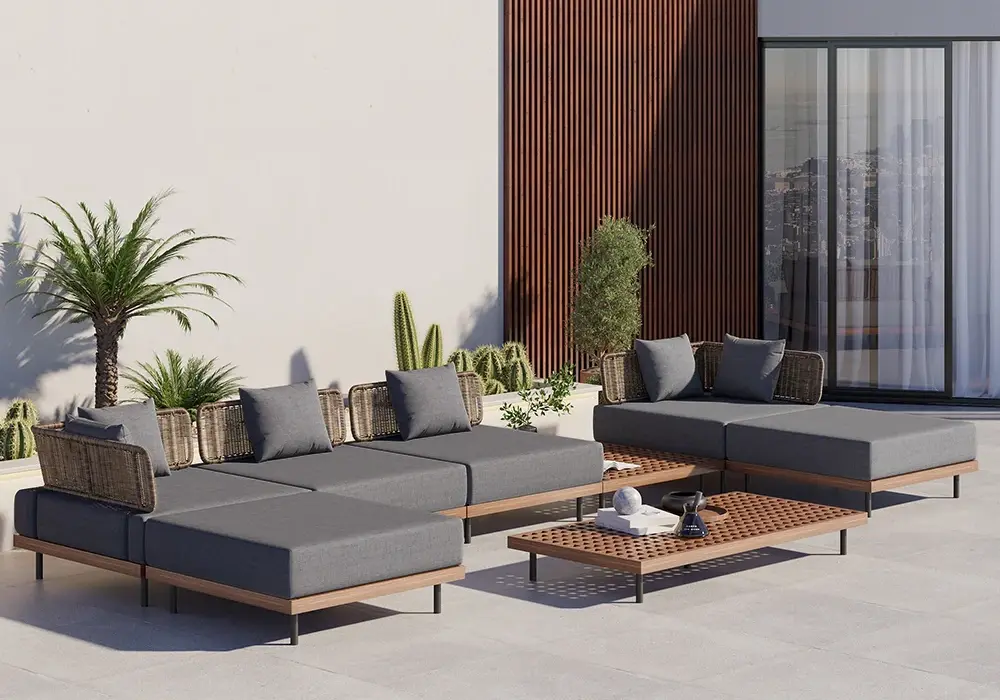
8 PiecesTeak & Aluminum & Rattan Outdoor Sectional Sofa Set
Table of Contents
What Does Weather Resistant Mean for an Outdoor Sofa?
Weather resistance describes a product's ability to withstand environmental conditions such as moisture, sunlight, temperature changes, and humidity. For outdoor sofas, performance depends on several components rather than the frame alone.
A useful starting point is to understand three terms commonly used in outdoor furniture descriptions.
Water-resistant materials help repel moisture and slow water penetration. Their performance depends on the fabric, finish, and construction.
Waterproof materials are designed to prevent water from passing through the specified material or construction. For cushions, the exact coverage of this claim matters because fabric, seams, zippers, and inserts can behave differently.
Quick-drying describes how efficiently moisture drains or evaporates after a material becomes wet. Cushion filling, fabric construction, airflow, and the surrounding environment all affect drying time.
These features address different aspects of outdoor use. A water-resistant cushion fabric, for example, does not automatically mean that the entire cushion will dry quickly after heavy rain.
When comparing a weather resistant outdoor sofa, consider the complete construction: the frame, finish, upholstery, cushion inserts, and any included protective accessories.
Compare Outdoor Sofa Materials
Material selection influences an outdoor sofa's appearance, weight, maintenance requirements, and suitability for different settings. Teak, aluminum, and PE rattan are common options, each with its own practical advantages.
Material | Main characteristics | What to consider |
Teak | Natural wood grain and a warm, organic appearance | Color changes, cleaning, and finish maintenance |
Aluminum | Lightweight construction and a clean, contemporary look | Protective coating, joints, and exposed hardware |
PE rattan | Woven texture with a variety of design options | Weave quality, UV performance, and cleaning access |
Outdoor upholstery | Available in different textures, colors, and performance grades | Water resistance, fade resistance, comfort, and care |
Protective covers | An additional layer of protection when furniture is not in use | Fit, fastening, and ventilation |
Teak: A Natural Choice for Outdoor Living
Teak is a popular hardwood for a weather resistant outdoor sofa, valued for its rich grain, warm golden-brown color, and natural durability. Its dense structure and naturally occurring oils help it withstand outdoor conditions, making it a practical choice for patios, terraces, and garden lounges.
Over time, exposure to sunlight and changing weather gradually transforms teak's original golden-brown tone into a soft silver-gray patina. This natural aging process adds character to outdoor furniture and allows teak to complement a variety of design styles, from contemporary terraces to relaxed garden settings.
Teak also pairs beautifully with neutral cushions, woven accents, stone surfaces, and greenery. For larger entertaining areas, the Grida 10-piece teak modular outdoor sofa set with fire pit combines teak construction with flexible seating arrangements, creating a coordinated setting for outdoor gatherings.
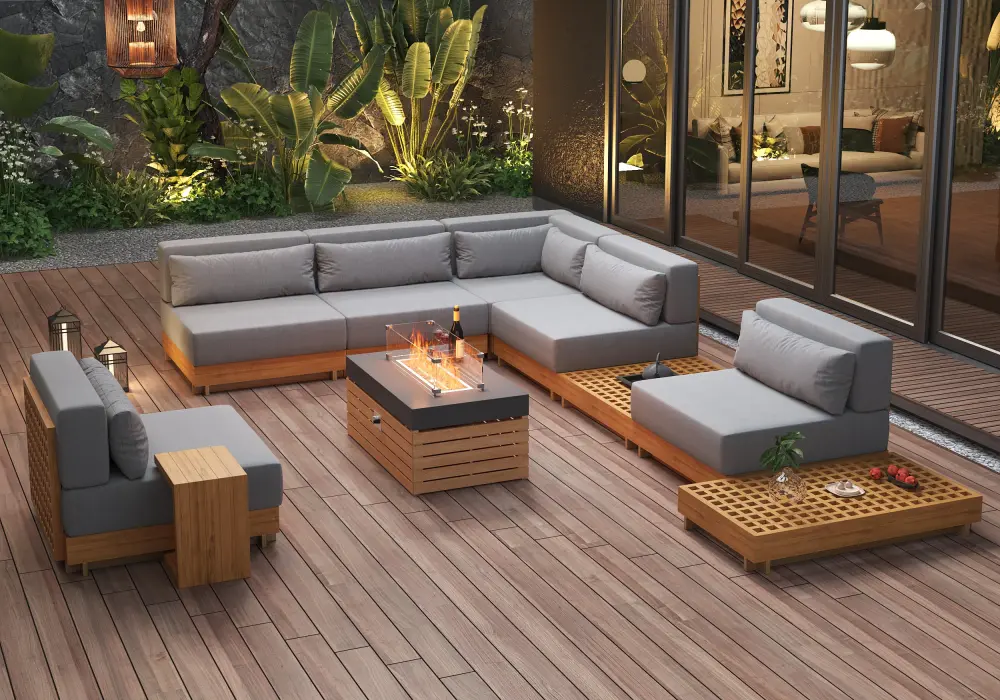
If you prefer a different sectional layout, the 4-piece teak sectional outdoor sofa set with fire pit pairs teak with aluminum alloy and offers L-shaped or straight seating configurations.
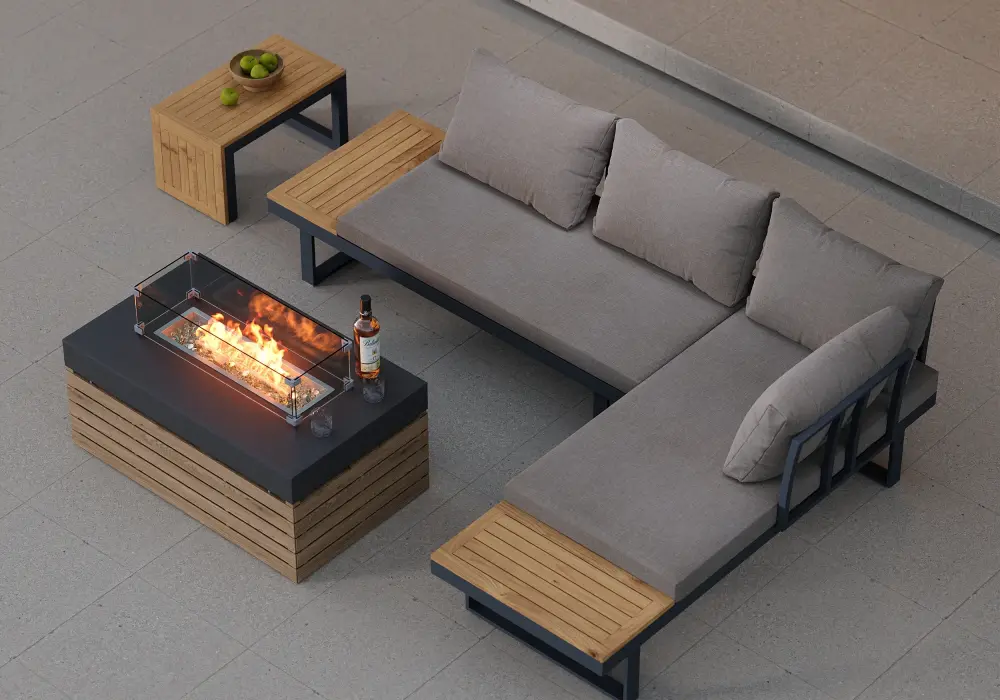
When comparing teak outdoor sofas, consider the frame design, cushion color, and overall dimensions alongside the wood itself. Regular cleaning and appropriate care will help maintain the furniture's appearance, whether you prefer teak's original warm tones or its naturally weathered finish.
Aluminum: Lightweight and Versatile
Aluminum outdoor sofas suit a range of settings, from minimalist terraces to contemporary poolside lounges. Their relatively lightweight frames are useful when furniture needs to be repositioned or a seating arrangement changes with the seasons.
The finish plays an important role in protecting the frame. Powder-coated surfaces, for example, provide a protective layer over the underlying metal.
When comparing aluminum sofas, look at the finish, connection points, exposed fasteners, and cleaning instructions. These details help you assess construction quality and understand the maintenance the frame requires.
For coastal settings, consider the combination of finish and hardware, as well as the manufacturer's recommendations for cleaning away accumulated salt and dirt.
Aluminum is especially suitable for buyers who value flexible layouts and a modern appearance.
PE Rattan: Texture Without a Heavy Appearance
PE rattan offers the look of woven furniture in a synthetic material. Its texture works well with wooden accents, metal frames, and neutral upholstery, making it adaptable to contemporary, coastal, and casual outdoor settings.
The quality of the weave influences both appearance and everyday maintenance. Look for consistent strands, secure edges, and a well-finished connection between the woven sections and the frame.
If the sofa will receive extended direct sunlight, consider the weave's documented UV performance. Also pay attention to how easily you can clean between the strands.
PE rattan is worth considering when you want an outdoor sofa that adds visual texture without making the seating area feel too heavy.
Choose Cushions for Outdoor Comfort
Cushions are an important part of the outdoor sofa buying decision. Their fabric, filling, construction, and care requirements all influence how comfortable and convenient the sofa will be.
Evaluate the Fabric
Start by identifying the upholstery material. Outdoor fabrics are available in different performance grades, and their properties vary by construction and treatment.
Look for information about moisture resistance, fade resistance, cleaning methods, and suitability for your intended placement. Fabric exposed to intense sunlight may need different performance characteristics from fabric used in a shaded seating area.
Consider the Cushion Filling
The outer fabric is only one part of cushion performance. The insert also affects how moisture is managed and how the cushion returns to a comfortable condition after becoming wet.
If the sofa will sit in an exposed area, review the manufacturer's information on drainage, drying, and storage. A cushion that is easy to move and dry may be more practical than one that is difficult to handle, particularly during rainy periods.
Comfort matters too. Consider cushion thickness, firmness, seat depth, and back support before prioritizing weather-related features alone.
Check Removable Covers and Cleaning Instructions
Removable covers can make routine cleaning easier, but a removable cover is not necessarily machine washable. Read the care instructions to understand whether washing, spot cleaning, or professional care is recommended.
Before purchasing, also consider whether replacement covers or cushions are available. Being able to replace worn upholstery can be useful when the frame remains in good condition.
Match Your Outdoor Sofa to the Patio
The best weather resistant outdoor sofa is one that suits the conditions of its intended location. Think about how much sun and rain the area receives, how exposed it is to wind, and whether cushions can be stored nearby.
Outdoor setting | Main consideration | Practical approach |
Uncovered patio | Rain exposure and cushion drying | Choose materials suited to regular outdoor exposure and plan accessible cushion storage. |
Sunny terrace | UV exposure and fabric fading | Prioritize documented UV performance and consider adding shade. |
Coastal property | Salt exposure and hardware maintenance | Choose suitable finishes and follow a regular cleaning routine. |
Covered porch | Sunlight, airflow, and occasional rain | Balance comfort and design with the exposure the space actually receives. |
Windy deck | Furniture stability and loose accessories | Consider the complete assembly and follow instructions for securing furniture and covers. |
Seasonal outdoor room | Storage space and winter care | Decide where cushions and accessories will go when the area is not in regular use. |
For Rainy Areas
If your patio receives frequent rain, pay particular attention to cushion construction and drying requirements. Keep a dry storage area available for cushions during prolonged wet weather, and choose a cover that fits the furniture properly.
Positioning furniture beneath suitable shelter can also reduce direct exposure. However, the furniture should still be maintained according to its recommended care routine.
For Sunny Areas
Sunlight can gradually affect upholstery color and the appearance of exposed materials. UV performance is therefore an important comparison point for sofas placed in open, sunny locations.
Shade from an awning, umbrella, or pergola can reduce direct exposure and make the seating area more comfortable. Choose fabric colors and textures that complement the surrounding surfaces while meeting your practical requirements.
For Coastal Areas
Coastal environments combine moisture with salt exposure, making frame finishes and exposed hardware especially relevant.
Consider the complete furniture construction rather than choosing by frame material alone. A suitable finish, accessible cleaning surfaces, and a manageable maintenance routine make it easier to care for furniture near the coast.
For Small or Flexible Spaces
On a compact patio or balcony, dimensions and configuration may be just as important as material selection.
Measure the available floor area and leave room for doors, walkways, and other furniture. Modular seating can provide flexibility, while a smaller fixed arrangement may be easier to position and maintain.
Think about storage access, too. A large cushion may fit the sofa comfortably but prove inconvenient to move through a doorway or store indoors.
Compare Construction, Size, and Everyday Usability
Weather resistance is only one part of choosing an outdoor sofa. Construction quality, dimensions, comfort, and replacement options also influence how well the furniture fits your needs.
Inspect the Frame and Connections
Look at how the frame components join together and how the finish covers exposed areas. Check that the furniture feels stable and that visible connections are well assembled.
For woven sofas, inspect the edges and transitions between the weave and the frame. For wooden furniture, consider the finish and the manufacturer's guidance on natural color changes and cleaning.
These details give you a more complete understanding of the furniture than a material name alone.
Measure the Complete Arrangement
Measure the full sofa configuration, including any sectional extensions, coffee tables, or other accompanying pieces. Leave enough space to move comfortably around the arrangement.
For modular furniture, review the dimensions of the layout you intend to use rather than relying only on the total number of pieces. The final footprint can change significantly depending on how the modules are arranged.
Also consider the depth and height of the seats. A sofa that fits the patio but feels cramped or uncomfortable will not be a good choice for long conversations or relaxed evenings.
Consider Long-Term Maintenance
Review the recommended cleaning products, seasonal care requirements, warranty terms, and availability of replacement parts.
Consider whether the routine fits your lifestyle. If you prefer minimal upkeep, focus on furniture with straightforward cleaning requirements and cushions that are manageable to store. If you enjoy natural wood and are comfortable maintaining its appearance, teak may be an appealing choice.
A practical maintenance plan is one you can follow consistently without making everyday patio use inconvenient.
A Final Checklist Before You Buy
Choosing an outdoor sofa becomes simpler when you evaluate the complete setup rather than focusing on one feature.
Use these questions to guide your final comparison:
- Does the frame material and finish suit the intended location?
- Are the cushion fabric and inserts appropriate for the expected exposure?
- Is the sofa comfortable for the way you plan to use it?
- Does the complete arrangement fit the patio and leave enough walking space?
- Can you clean, move, and store the cushions easily?
- Are the care instructions, warranty terms, and replacement options suitable for your needs?
There is no single material that works best for every outdoor space. Teak offers natural warmth, aluminum provides a lightweight frame, and PE rattan adds woven texture. Cushion performance, construction quality, and everyday care are equally important when comparing complete sofas.
The right weather resistant outdoor sofa is one that fits your space, handles its intended environment, and remains practical to use throughout the season.
Frequently Asked Questions
Can a Weather Resistant Outdoor Sofa Stay Outside All Year?
Some outdoor sofas are designed for extended outdoor use, but suitable placement depends on the construction, cushions, climate, and care routine. Follow the manufacturer's guidance for covers, cushion storage, and seasonal maintenance.
Are Waterproof Cushions the Same as Quick-Drying Cushions?
No. Waterproofing describes resistance to water passing through a specified material or construction, while quick-drying describes how efficiently moisture drains or evaporates. Consider the fabric, seams, cushion inserts, and recommended drying method together.
Is Teak or Aluminum Better for an Outdoor Sofa?
Both can be suitable choices. Teak offers a natural wood appearance that changes with exposure, while aluminum provides a lightweight frame that works well in contemporary spaces. Choose according to your design preferences, intended location, and maintenance routine.
Do Outdoor Sofas Need Protective Covers?
A suitable cover can help protect outdoor furniture when it is not in use. Choose the appropriate size and follow the cover manufacturer's guidance on fastening, ventilation, and drying.
How Long Does a Weather Resistant Outdoor Sofa Last?
Service life varies with construction, materials, exposure, use, and maintenance. Compare warranty terms, care requirements, and replacement-part availability to understand the long-term ownership considerations of different models.