

To decorate a media console, establish a clear viewing area, group a few objects to one side or both ends, and leave usable space for equipment, ventilation, and everyday access. Start with TV stands and media consoles that fit the wall and television, then choose decor around the remaining surface. The strongest arrangement usually gives the screen a calm setting while making the furniture feel connected to the rest of the room.
You do not need to fill every section of a long cabinet. A console already contributes shape, finish, and texture. Styling works best when it supports those features and leaves enough open surface to make the arrangement easy to use and clean.
Table of Contents
Begin with the screen and equipment
Before adding a vase, put the television, soundbar, streaming device, and other everyday components in their intended positions. Sit in your normal viewing seat and check the bottom of the screen. A decorative object that seems low while standing can interrupt subtitles or the remote-control path from the sofa.
For a television resting on the cabinet, confirm that the stand supports its feet and weight as required by both manufacturers. Decor must not substitute for secure placement. For a wall-mounted screen, use the actual gap below the television to judge object height rather than relying on a staged photograph with different proportions.
Leave ventilation openings unobstructed and follow each device’s clearance instructions. A router hidden behind dense objects or electronics packed into an unsuitable enclosed compartment can create functional problems. Place the working items first; the leftover space is your styling area.
Choose one visual starting point
Pick one object or material that relates to the room: a ceramic bowl that repeats the sofa’s warm tone, a dark vessel that echoes window frames, or a small stack of books connected to your interests. This gives the display a reason to exist beyond filling the top.
Then choose supporting pieces with different profiles. A rounded bowl, a vertical vase, and a horizontal stack create variation without requiring many objects. Keep the palette restrained enough that the screen and furniture still read clearly. There is no requirement that every item match exactly; a small difference in finish can make a group easier to distinguish.
Try the arrangement with objects you already own before buying anything. Move one piece at a time and photograph the result from the seating area. The camera often reveals crowding or uneven visual weight more clearly than viewing the surface from close range.
Use height where it will not compete with the picture
Tall objects generally work best outside the screen’s outline. If there is little clearance, choose low bowls, flat stacks, or a single small sculpture. Avoid making a narrow gap appear even tighter with an object that almost touches the television.
Asymmetry can suit a long, low cabinet: a stronger group at one end, a smaller object at the other, and open space between. Symmetry can work when the architecture already establishes a formal center. Neither is a rule. The useful test is whether the screen remains easy to watch and the arrangement feels balanced from the sofa.
If the television is off-center because of a doorway or room layout, do not force the decor into a misleading central arrangement. Balance the whole wall, including nearby artwork, a floor lamp, or shelving. The console does not need to carry all the room’s decorative weight.
Match the styling to the console’s design
The Velar 71"–114" Sintered Stone Top Extendable TV Stand has an oval profile, fluted detailing, a sintered stone top, and three drawers, according to Homary. A restrained group of smooth objects can contrast with the fluting without concealing the cabinet’s shape.
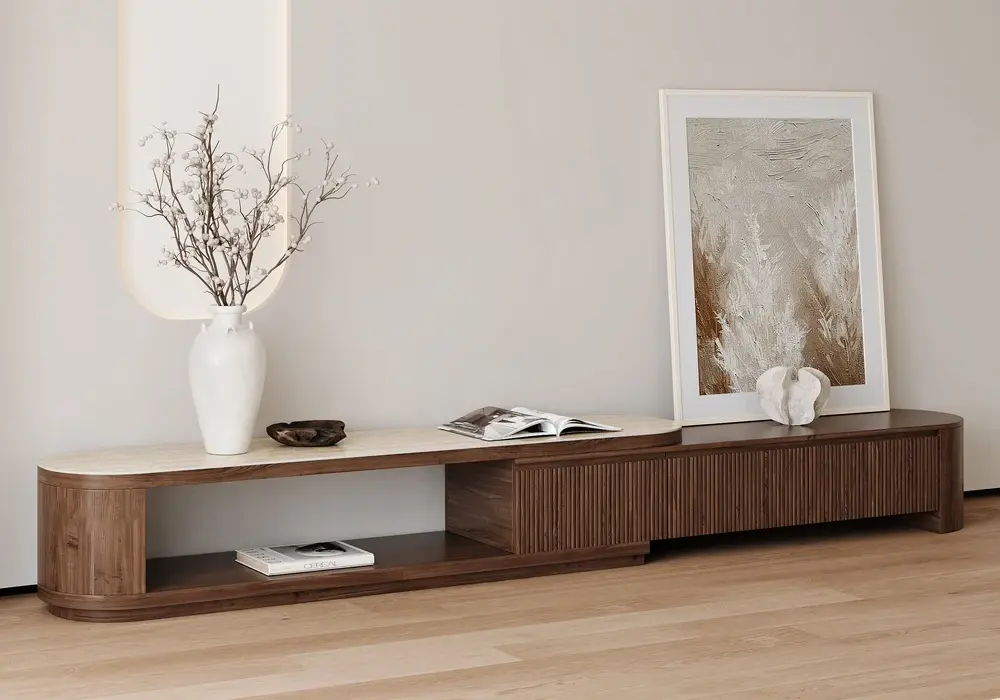
On an extendable cabinet, decide the working width before styling. Keep moving sections and joints clear, and do not bridge an adjustment point with a heavy decorative arrangement. A display that fits the shortest configuration may feel stranded when the cabinet is extended; redistribute it after setting the furniture.
The 94" Ash Veneer Glass Doors LED TV Stand offers ash veneer, glass doors, and LED lighting. Homary also describes adjustable shelving. Treat the visible interior as part of the composition: organize a few purposeful groups inside instead of decorating the top heavily and leaving the cabinet visually busy below.
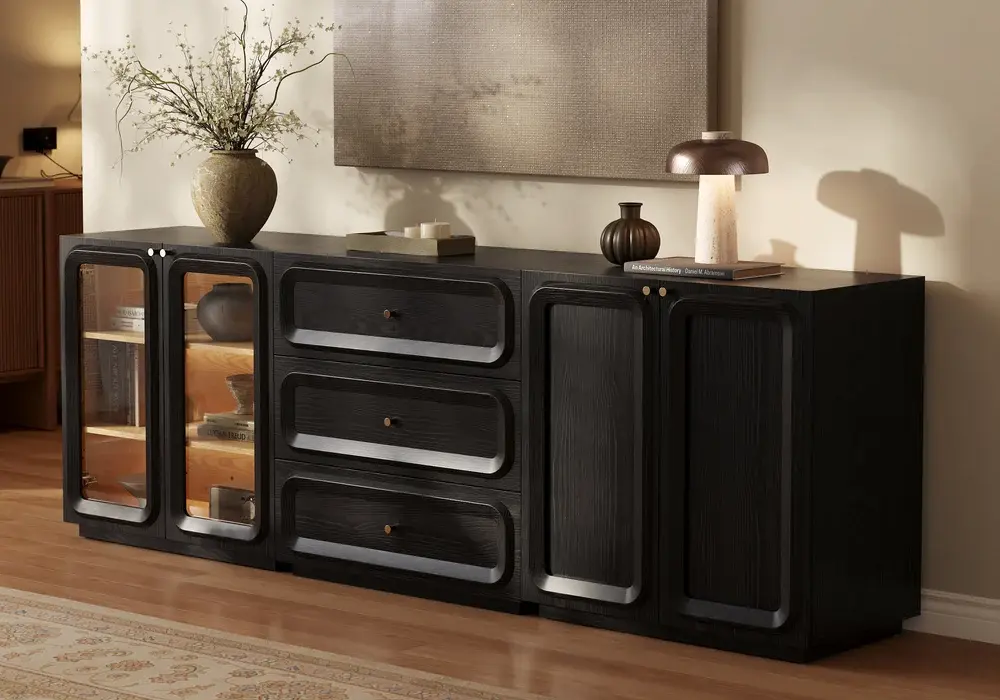
The Larvo 80" Ash Wood TV Stand combines an ash wood design with built-in dimmable LED lighting. For this type of console, try the lighting before adding another illuminated accent. A quiet arrangement can let the cabinet’s own materials and glow establish the mood.
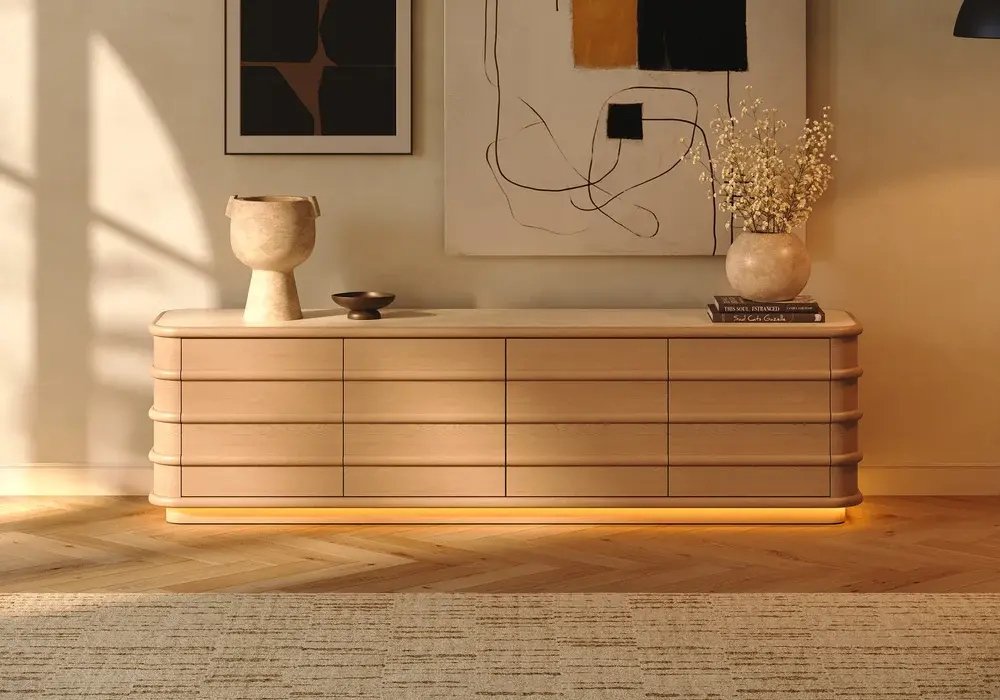
These are styling directions rather than fixed product prescriptions. Check the selected finish against your flooring and surrounding furniture. Screen size, cabinet placement, and daylight can change how a material reads in the room.
Keep storage useful behind the display
Decor should make daily tidying easier. Give remotes, controllers, charging leads, and spare batteries a defined place so they do not migrate across the top. A small tray can help with frequently handled items, provided it does not block ventilation or the controls you need.
Inside drawers, group items by use rather than appearance. Keep occasional accessories separate from things you reach for every evening. Avoid filling a drawer so tightly that it becomes difficult to close or find anything. Concealed storage helps the surface stay calm only when its contents remain accessible.
If you display books behind glass, leave space to remove them without dismantling the whole shelf. Put frequently used devices where their controls and connections remain reachable. You should be able to tidy the console in a few minutes, not rebuild a photograph after every movie night.
Manage cables before adding the final objects
Trace each cable from its device to its destination. Separate loose excess length from the parts that need movement or access. Use suitable cable-management accessories, while keeping connections, adapters, and device ventilation consistent with their instructions. Avoid squeezing cords beneath the console’s feet.
Check the arrangement from the room entrance as well as the sofa. A cable hidden from one angle may remain conspicuous from another. If a wall-mounted television has an exposed cable route, address that route directly with an appropriate solution rather than disguising it behind a fragile stack of decor.
Leave room for maintenance. If replacing a lead requires moving several heavy objects, reduce the display. Practical access is part of a successful arrangement, especially in a family room where consoles and accessories change over time.
Use light and greenery selectively
A lamp can soften the television wall, but its shade and reflection need testing after dark. Sit in the viewing position with the screen on. If the lamp creates a distracting reflection, move it farther to the side or use another location in the room.
For greenery, choose a plant suited to the available daylight and keep watering away from electronics. Use a protective container appropriate to the furniture surface. An oversized trailing plant can hide the screen edge, cover controls, or interfere with a drawer; a smaller plant is often easier to maintain in this location.
Finish by removing one unnecessary item. Then test the setup during normal use: open drawers, reach the remote, operate the sound system, and wipe the top. Adjust anything that makes those tasks awkward. Keep the objects that contribute to the room and leave the rest of the surface available.
Frequently Asked Questions
What should I put on a media console?
Start with essential equipment, then add a small group of objects such as a bowl, books, or a vase. Choose pieces that fit outside the viewing area and relate to the room. Open space is a useful part of the arrangement.
Should both ends of the console match?
They can, but matching pairs are optional. Balance can come from different objects with similar visual weight. Judge the complete wall from your seating position, especially when a doorway or nearby lamp makes the room asymmetrical.
How do I style a console under a low TV?
Use low-profile objects and keep the area immediately beneath the screen clear. Put taller decor elsewhere on the wall or in the room. Do not let styling obstruct the screen, soundbar, receiver, or required equipment clearance.
Can I decorate an extendable media console?
Yes. Set its width first, then arrange objects on stable surfaces without obstructing the adjustment mechanism. Recheck the composition after changing the width. Follow the furniture instructions before moving sections with equipment on top.
How much decoration is too much?
The surface is overcrowded when objects interfere with viewing, ventilation, cleaning, or drawer access. Remove pieces until each remaining item has a clear purpose and the console works easily during everyday use.