

Decorating TV stand shelves starts with deciding what each space needs to do. Set aside room for media equipment first, hide everyday clutter where you can, and style the remaining shelves with a few books and objects you enjoy. Keep the display balanced and easy to reach, and leave enough empty space so the shelves do not feel crowded. The goal is a TV stand that looks considered from the sofa and remains practical for everyday use.
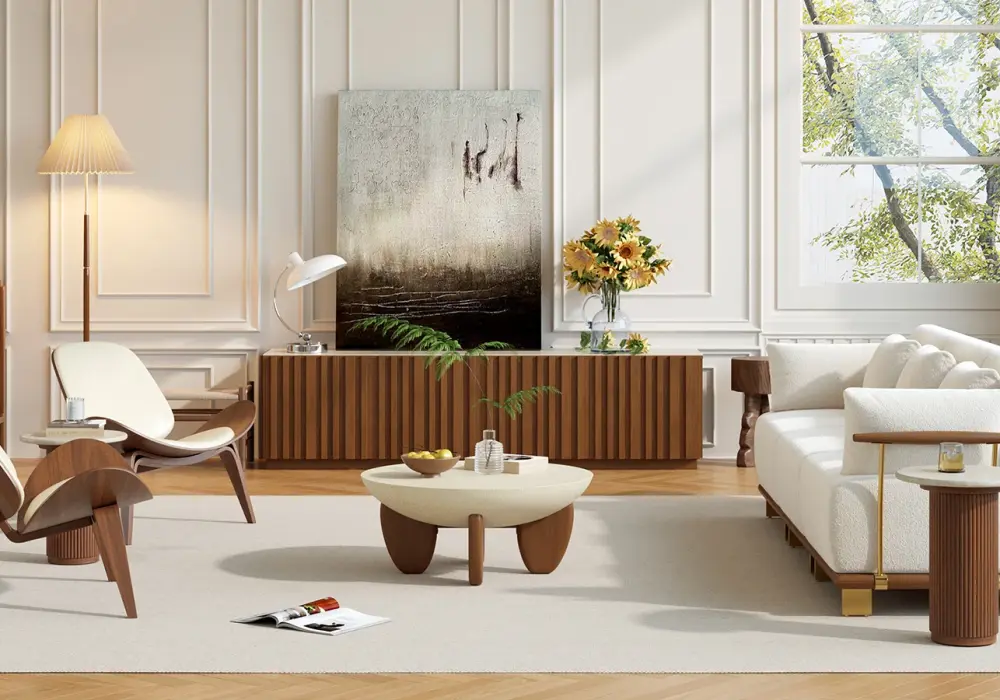
Aura 83" Ash Wood Fluted Walnut TV Stand
Table of Contents
Start by Giving Each Shelf a Purpose
Before adding decor, remove everything from the shelves and sort it into three groups: media equipment, daily essentials, and display pieces. A router, gaming console, or receiver may need an open position for connections and ventilation. Remotes, spare cables, and controllers can often go into drawers or other closed storage. Books and decorative objects belong in the space left after those practical needs are settled.
Measure each shelf opening, including its usable depth and height. Test an object in place rather than relying on how it looks beside the stand. A large bowl may fit across the shelf but project too far forward, while a tall vase may disappear behind the television. Check the view from your usual seat, not only from directly in front of the furniture.
An exposed ledge creates a different styling opportunity from a boxed-in cubby. Open shelves can display a small arrangement, while closed storage can keep everyday accessories out of sight. Treat each shelf according to its size, depth, and function rather than trying to make every section look the same.
What to Put on TV Stand Shelves
The best shelf decor depends on the size and shape of the space, but a few categories work especially well.
Books
Books can add color and create a simple horizontal base. Stack a few books and place a small stable object beside them or on top if the surface is secure. In a taller cubby, upright books with a bookend can make better use of the available height.
Keep books easy to remove. A decorative stack that has to be dismantled every time you need a remote or controller is not serving the shelf well.
Framed Photos and Small Artwork
A framed photograph or small piece of artwork can add a personal element without taking up much space. Lean a frame securely against the back of a shelf or place it where it remains visible without competing with the screen.
For smaller shelves, one frame may be enough. Avoid adding several pieces of similar size when a single focal point can do the job.
Vases and Sculptural Objects
Rounded vessels, small sculptures, and other decorative objects can soften the straight lines of a TV stand. Pairing a rounded object with rectangular books or a frame can create more visual variety.
Choose pieces that match the scale of the shelf. A decorative object should feel intentional rather than squeezed into whatever space is available.
Plants
A small plant can add softness and a natural element to an otherwise wood, metal, or glass display. Choose a size that does not block the television, equipment, or nearby decor.
Baskets for Everyday Items
Baskets can help collect suitable loose items such as spare remotes, controllers, or accessories. Choose a basket that fits the shelf comfortably and can be removed easily.
Do not use a decorative basket as an assumed enclosure for hot electronics. Equipment still needs the ventilation and access specified by its manufacturer.
Simple TV Stand Shelf Styling Ideas
Once the practical needs are settled, build one small arrangement before filling the next shelf.
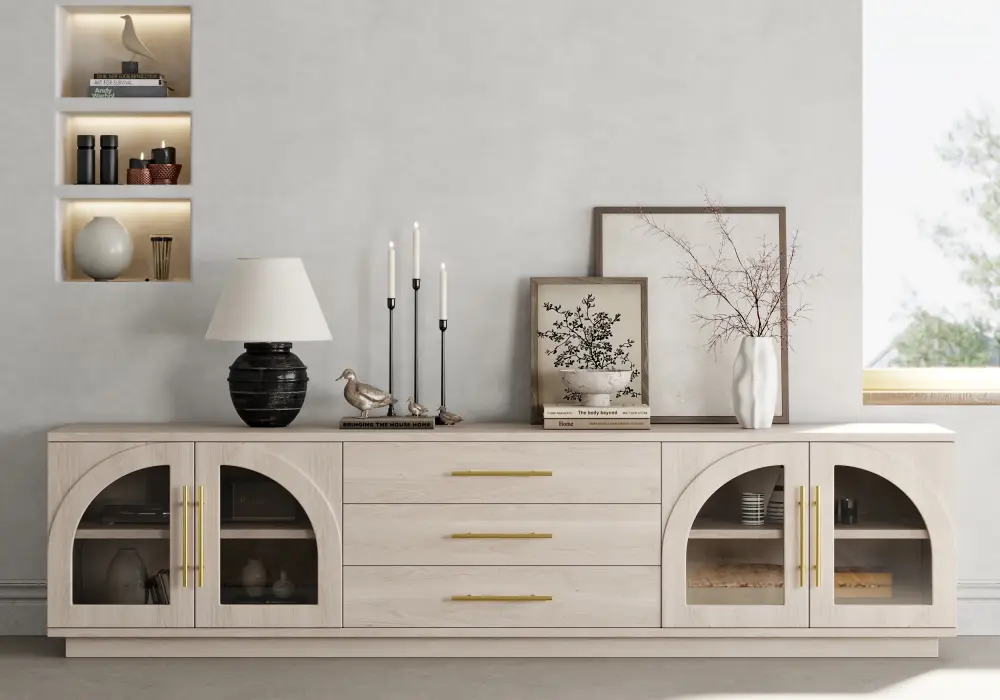
Arune 80" Arched Glass Doors TV Stand
Mix Different Shapes
Vary the silhouette instead of using matching objects in every compartment. A rounded vase beside rectangular books creates contrast, while a small frame can add another visual shape.
From across the room, separate forms are usually easier to read than a row of equally sized ornaments.
Combine Tall, Medium, and Low Pieces
Different heights help an arrangement feel balanced. A taller vase or frame can provide vertical interest, while books or a low object create a horizontal base.
You do not need to use all three heights on every shelf. The goal is simply to avoid making every object sit at exactly the same level.
Group Objects Instead of Filling Every Shelf
A shelf does not have to be filled from edge to edge. Group two or three related pieces together and leave visible space around them.
Empty space gives the eye a place to rest and can make a smaller collection look more deliberate.
Repeat Color Quietly
Choose a small palette that already exists in the room. If the sofa is warm beige and the furniture has a walnut finish, neutral books and a pale ceramic object can connect the display visually.
A darker object can echo the television screen, while one stronger accent color can add interest without making the shelves feel busy. You do not need to repeat every room color across the display.
Use Shelf Depth Carefully
An object that looks well proportioned from the front may feel awkward once it projects toward the room. Keep deeper pieces toward the back when possible and avoid placing unstable objects close to the front edge.
For narrow shelves, slim frames, books, and compact decorative objects are often easier to work with than large vessels.
How to Keep TV Stand Shelves Clutter-Free
Good shelf styling depends as much on what you leave out as what you display.
Start with a small number of objects and add only when something is missing. If every opening contains a decorative piece, the arrangement can quickly feel crowded.
Use closed storage for items that need to be close by but do not need to stay visible. Remotes, cables, controllers, and other everyday accessories can often be grouped in drawers or a suitable container.
Also consider how the shelves look from your normal seating position. Take a photo from the sofa and see where your attention goes. If the shelves attract more attention than the room's intended focal point, reduce the contrast or remove a piece.
A final edit can make a significant difference. When the display feels finished, remove the least useful object rather than adding another one.
Style Around Electronics, Not Over Them
TV stand shelves often need to serve both decorative and functional purposes. Let the equipment determine its position first, then arrange decor around it.
Keep Vents and Sensors Clear
Follow the equipment maker's ventilation requirements and keep vents unobstructed. An object in front of a receiver sensor can also interfere with remote controls.
Do not surround electronics with books, baskets, or cloth simply to conceal them.
Leave Cables Accessible
Keep cords reachable without leaving them loosely draped across the styled shelf. Use cable management that works with the equipment and furniture, and avoid tight bends or cables being pinched by drawers.
Use Baskets for the Right Things
A basket is useful for appropriate loose accessories, but it should not be treated as a universal solution for hiding electronics. If a device requires an open shelf, keep that position functional and style the surrounding space instead.
Keep Lighting Practical
A small lamp can add warmth beside a TV stand, but check its height, cord route, and potential screen reflection. Test the lighting from the sofa, especially after dark.
Battery-operated decorative lights can work well for a display. Avoid introducing unnecessary heat or flame close to equipment and furniture.
Edit the Display for Everyday Life
Give the arrangement a few days before deciding that it needs more. Notice which items are moved during cleaning and which shelves collect unsorted mail, remotes, or controllers.
Those everyday objects need a permanent place to go. On a TV stand with closed storage, the storage area should do much of the organizational work so the visible shelves can remain simple.
A seasonal refresh can be small. Change one photograph, replace a vase, or rotate a favorite object while keeping the basic arrangement intact.
When the stand feels finished, step back and review the whole display. Check that the television remains clear, equipment can breathe, drawers open easily, and nothing feels unstable near the edge.
Decorating TV stand shelves works best when the display supports the room's daily rhythm. You do not need every shelf to carry a full collection; a few well-chosen pieces and enough breathing room can be more effective.
Frequently Asked Questions
What should I put on TV stand shelves?
Start with any equipment that needs an open position, then use the remaining space for books, framed photos, small plants, vases, or stable decorative objects. Keep remotes and loose accessories in suitable closed storage. Measure the shelf opening and check the view from the sofa before choosing a larger display piece.
How do I decorate TV stand shelves without making them look cluttered?
Create small groups with distinct shapes and leave space around them. Avoid filling every opening simply because it is available. Repeat a few colors from the room, then review the arrangement from your usual seat. Remove objects that interfere with equipment access or do not add anything useful or personal.
Can I use baskets to hide electronics?
Do not assume a basket provides suitable ventilation or connection access for electronics. Follow the device maker's placement instructions and keep vents clear. Baskets can be useful for loose items such as spare remotes or accessories, provided they fit the shelf and can be removed easily.
How do I decorate a TV stand with open shelves?
Place functional equipment where it needs to go first, then build small decorative groupings around it. Mix books, frames, vases, or plants at different heights, and leave visible empty space between groups. Use drawers or closed storage for everyday clutter so the open shelves stay visually simple.