

To style a dining table, begin with the meal: place the dishes people will use, leave room for serving, and build the decoration around what remains. A setting feels considered when the colors connect to the room and the center stays low enough for conversation.
If you are learning how to style a dining table, think of the arrangement as a sequence rather than a shopping list. The plates establish the scale. A textile can soften the surface or introduce color. The centerpiece then gives the setting a focal point. Different meals need different versions of that sequence.
Table of Contents
Choose a mood from something already in the room
Pick one detail to guide the table. It might be a muted green in the curtains, a warm wood tone in the chairs, or the pale ceramic finish of your everyday dishes. Repeat that detail in a napkin or vessel instead of trying to make every object match.
For a quiet setting, keep most pieces within a small range of related colors and let texture provide the difference. A softly folded napkin against a smooth plate is enough contrast to make a simple place setting feel deliberate. For a more expressive dinner, use a patterned textile as the main feature and keep the dishes quieter. Look at the whole dining area before committing. A patterned rug, sculptural pendant, or strong chair color already contributes to the scene. The table does not need another competing pattern simply because the accessories are individually attractive.
Build one place setting, then repeat it
Set one place at the table before arranging the center. Put down the dinner plate and the utensils the meal calls for. Add the drinking glass and napkin, then sit in the chair. This makes it easier to spot a placemat that is too large or glassware sitting where an elbow naturally moves.
Only stack a smaller plate or bowl if it has a role in the meal. A soup bowl is useful for soup; several unused layers make a casual lunch harder to serve. The same applies to extra cutlery. A complete setting is the one that lets someone eat comfortably without clearing decorative pieces first.
Repeat the setting around the table, making small adjustments where the shape changes. On a round surface, the outer edge gives diners room while the center becomes shared space. Avoid letting broad rectangular placemats overlap there. A smaller mat, a rounded shape, or no mat may be a better fit.
For a four-person breakfast, set the cups and plates you actually use. For a hosted dinner, add the next course's pieces only if they improve service. The repeated placements bring enough order that the centerpiece can remain relaxed.
Let the tabletop shape guide the center
A circular table usually suits one compact central arrangement. On Homary's whitewash round-to-oval extendable dining table, the surface changes from 39 to 55 inches (99–140 cm), with seating for four to six. In its round form, a small central vessel can anchor the place settings. In its oval form, a narrow runner can give the longer setting direction without filling the ends.
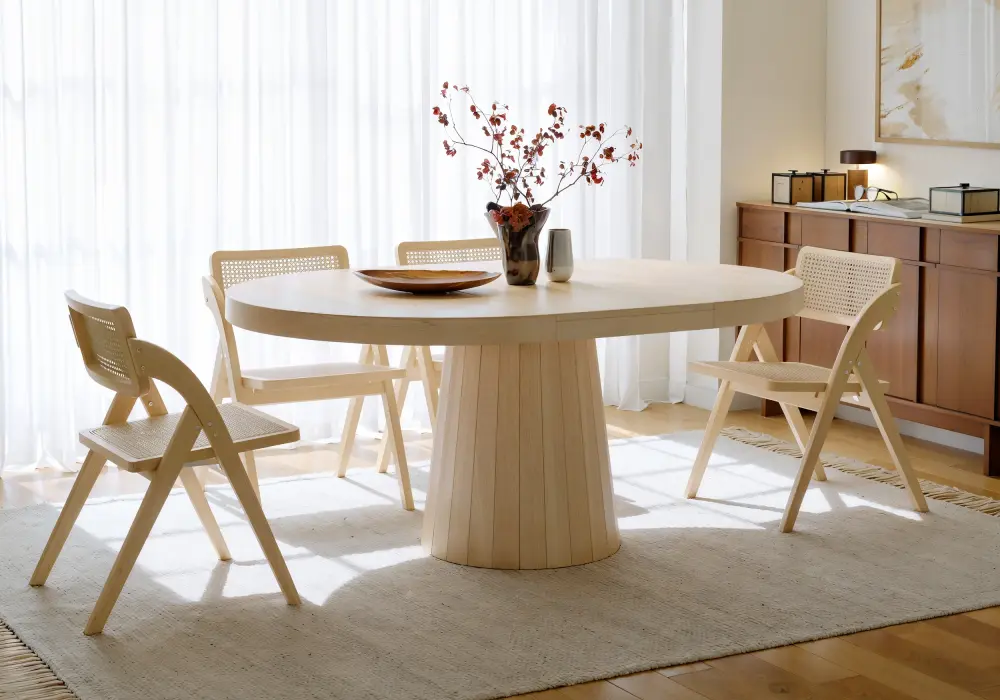
Extend the table before styling it for guests. Lay out the extra places, then decide whether the center needs a second small object or simply more open space. The extra furniture surface is often needed for the meal rather than for a larger decoration. Keep objects away from the working join and move them before changing the table's configuration.
The 39-inch round natural wood dining table has a pedestal base and seats two to four. At that scale, one shallow bowl may be enough to complete the setting. The room image shows the rounded tabletop and vertical detail on the base, giving the furniture visual interest of its own. Leave some of the surface visible so those features can contribute to the room.
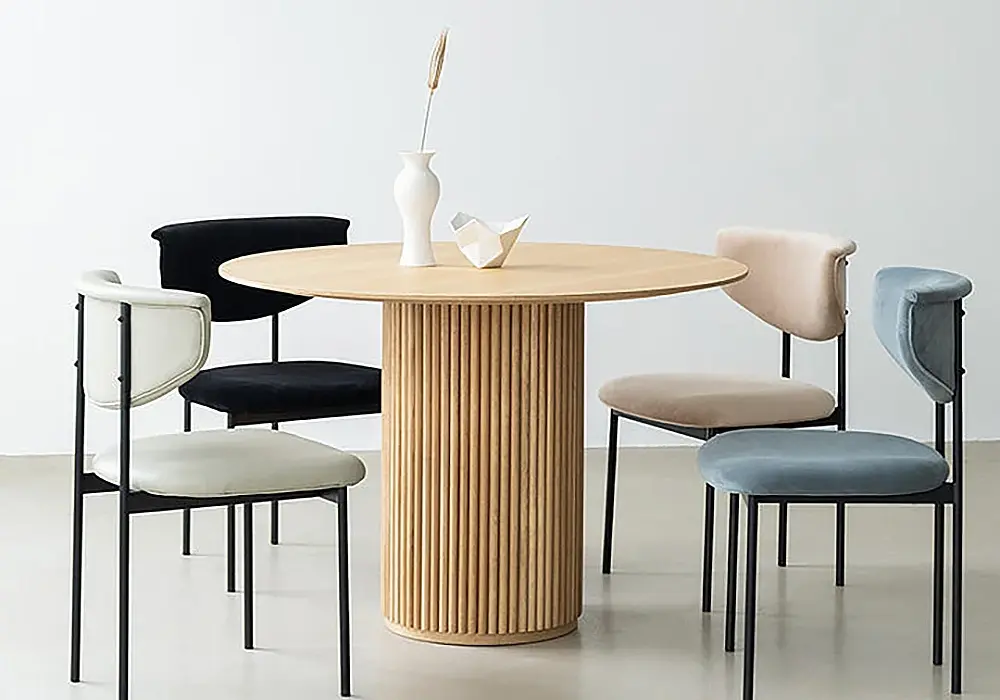
Test any arrangement from a seated position. If a vessel or its stems hides the person opposite, shorten the display or move it to a sideboard during dinner. The shape of the flowers matters as much as the container's height.
Use textiles to create contrast, not extra layers
Choose a runner, placemats, or a tablecloth for a specific effect. A runner draws the eye along an oval table. Placemats define individual places. A tablecloth changes the overall appearance and can make an everyday setup feel more dressed for an occasion. You do not need all three at once.
The Fluve extendable oval black dining table provides a dark foundation for pale dishes or a warm neutral textile. It extends from 63 to 79 inches (160–201 cm) and seats four to six. A light runner can repeat the color of the chair upholstery while leaving the black surface visible along either side. That is a styling suggestion, not a requirement to cover the table.
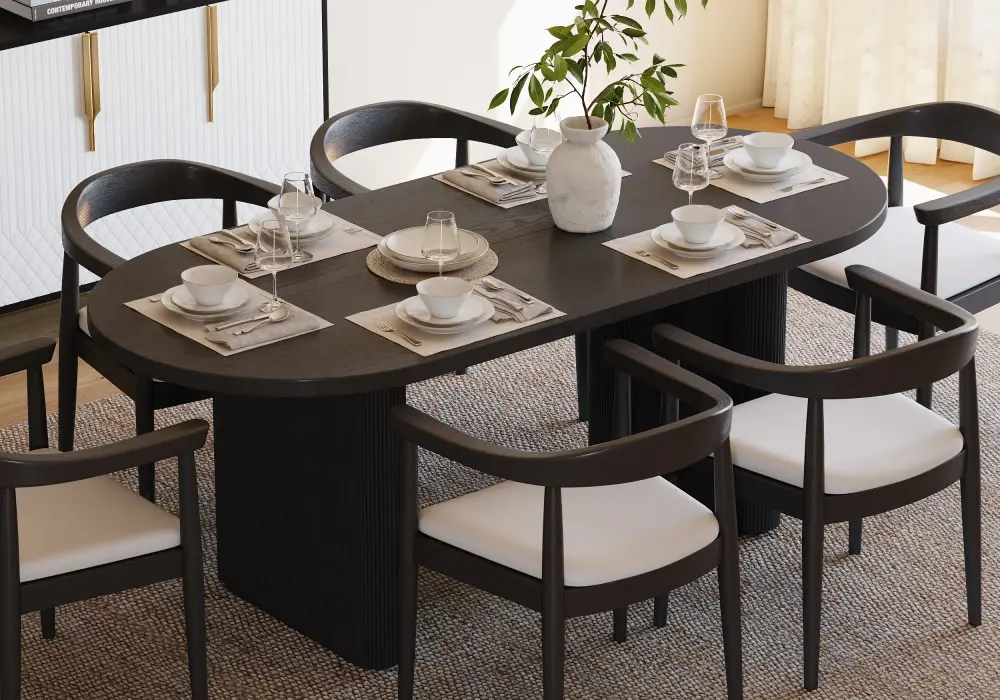
Keep the runner narrow enough that plates sit steadily. Test the ends against the chairs so the fabric does not bunch in a lap or catch when someone stands. If the table changes length, check the drop again in the extended arrangement.
A decorative textile is not automatically protection against hot dishes or spills. Use suitable trivets and coasters, follow the table's care instructions, and choose washable napkins for frequent meals. A setting is easier to enjoy when its ordinary cleanup is manageable.
Make the serving style part of the design
For a family-style dinner, shared dishes belong in the layout from the beginning. Place the largest serving bowl and water pitcher before adding flowers. If the center becomes crowded, move the decoration elsewhere and let the food be the focal point. A beautiful table can be full of dinner rather than ornaments.
For individually plated food, the middle may stay clearer. A short line of small vessels can work on an oval table, provided it leaves sightlines open. Set them in an uneven, relaxed arrangement instead of spacing every object as though it were another place setting.
Try this order when preparing for guests:
- Extend the table if needed and place every chair.
- Lay out the plates, utensils, and glasses for the meal.
- Position shared dishes or leave their intended spaces clear.
- Add the textile and a small centerpiece in the remaining space.
- Sit at the tightest place and check reach and conversation.
An everyday reset can be much smaller: remove used dishes, fold away the textile if it is no longer needed, and keep one object in the center. The table should suit the hours between meals as well as the moment guests arrive.
Prepare the room around the setting
Place spare serving pieces nearby before guests sit down. A sideboard can hold the next course or a water refill, leaving the table free for conversation. Use the lighting that will be on during dinner when judging the colors. A setting that looks crisp in daylight may need a simpler arrangement under softer evening light.
Photograph the finished setting from seated height and from the doorway. The first view shows whether it works for diners; the second reveals how it relates to the room. If it feels busy, remove the least useful layer before adding another. Knowing how to style a dining table includes knowing when the arrangement is complete.
Explore the linked Homary dining tables for shapes and finishes that support the meals you serve, then build the setting from the plates outward.
Frequently Asked Questions
Can I style a dining table without a runner?
Yes. Repeated place settings and one modest centerpiece can provide enough structure on their own. A bare tabletop is especially effective when the finish or shape deserves attention. If you skip the runner, still use the surface protection required for hot serving dishes and choose accessories that sit steadily on the table.
Do the napkins need to match the placemats?
No. They can share an undertone or repeat a color elsewhere in the dining area. If the placemats have a strong pattern, plain napkins give the eye somewhere quieter to rest. Try one complete setting first so the combination can be judged together rather than as separate items in a shop.
How should I style a glass or glossy table?
Start with fewer pieces and assess the reflections as part of the arrangement. A vase and its reflection can have more visual presence than expected, while a textile can soften a glossy surface. Check from the dining chairs under the lighting used for meals. Follow the specific surface's care instructions when choosing protective pads.
What if the dining table is also a workspace?
Make the meal setting easy to put away as a group. Store folded napkins and everyday dishes nearby, and keep the permanent centerpiece small enough to relocate. A tray can help if it fits the arrangement comfortably. Avoid elaborate layers that make the switch between a laptop and dinner take several trips.