

Is wicker good for outdoor furniture? Yes, as long as it is all-weather resin wicker on a rust-resistant frame. Natural wicker left outside will crack, sag and mold within a season or two, which is why the answer depends on the material.
Part of the confusion is the vocabulary. "Wicker" describes how a piece is woven, not what it is made of, so it can be natural plant fiber or synthetic strands. "Rattan" is a natural climbing palm, yet many sellers now use the word for plastic strands too. That is why a product page that says "rattan" tells you little about how the piece will last outdoors.
Done right, outdoor wicker looks warm, sits comfortably and is lighter than teak. This guide explains the materials, how they cope with rain, sun, cold and salt air, how to care for them, what they cost over time, and what to check before you buy. Along the way, we point to two products that fit the advice.
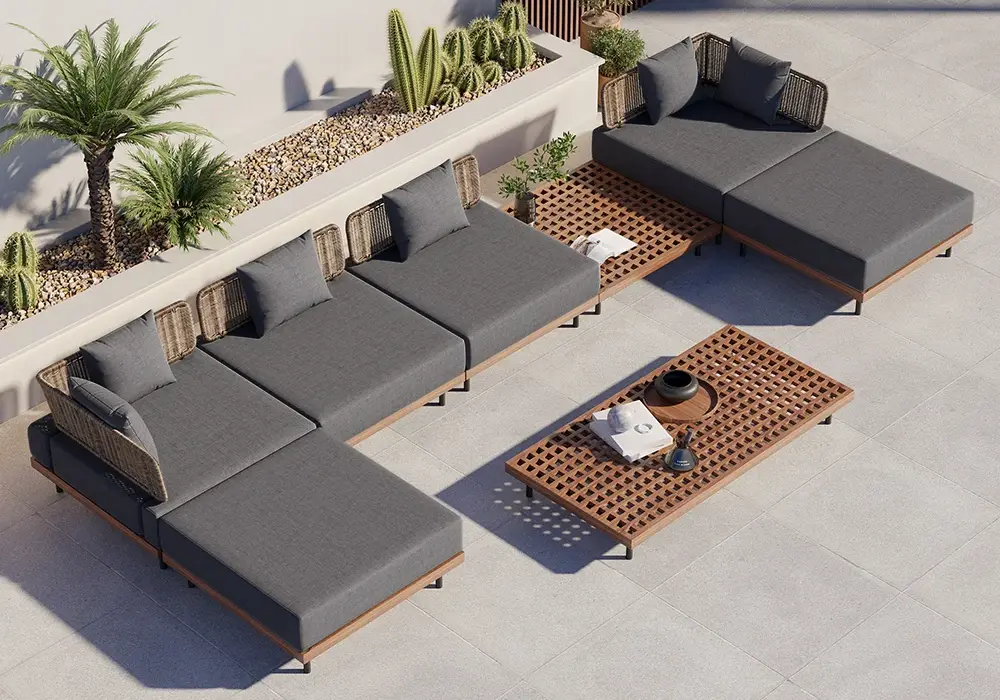
8 PiecesTeak & Aluminum & Rattan Outdoor Sectional Sofa Set
In this guide
Natural vs. Resin Wicker: Which Is Good for Outdoor Use?
Only resin wicker is built for open-air use. Natural wicker belongs indoors or on a fully covered, dry porch.
Natural wicker is woven from plant fibers such as rattan, willow, reed or cane. It looks warm and handmade, but it absorbs moisture. Rain and humidity cause swelling, mold and splitting, and strong sun dries it until it turns brittle.
Resin (synthetic) wicker is woven from extruded plastic strands, usually polyethylene (PE, often HDPE) or PVC, made to look like natural fiber. It does not soak up water, and good grades include UV stabilizers so the color holds. This is the material sold for patios, balconies, gardens, terraces and poolsides.
A note on labels. Many sellers write "rattan" or "PE rattan" when they mean synthetic strands. If a listing says only "rattan", look for PE or HDPE in the specifications before assuming it is weatherproof. Rope weave, made from soft cord, is a related but different style with its own care needs.
The material, not the weaving style, decides whether wicker works outdoors.
What Makes Outdoor Wicker Furniture Last? Materials, Frames and Lifespan
A wicker set lasts as long as its weakest part, and that is often the frame, not the weave.
The weave
- HDPE: dense, flexible and UV-stable. The best long-term choice.
- Standard PE: a middle option. Quality depends on strand thickness and UV treatment.
- PVC: cheaper, but it tends to stiffen and crack under sun and cold.
- Natural rattan or willow: a short outdoor life, as covered above.
The frame
- Powder-coated aluminum: light and rust-proof. The usual best choice for outdoor sets.
- Steel: strong, but it can corrode from the inside in humid or coastal air, especially once the coating chips.
- Stainless steel or treated hardwood: premium options for long life.
Typical lifespan
Setup | Approximate outdoor life |
Natural wicker, uncovered | 1–3 years |
Low-cost PVC weave on a steel frame | 2–5 years |
Quality HDPE weave on powder-coated aluminum, with care | 7–15 years |
These ranges are rough guides, not guarantees. Sun exposure, moisture and upkeep move them in either direction.
Quality signals to look for
A warranty of three years or more, replaceable weave strips, available spare parts and stated UV or weather testing all point to a maker who expects the piece to last. A listing that names its materials precisely usually signals a seller who will stand behind them.
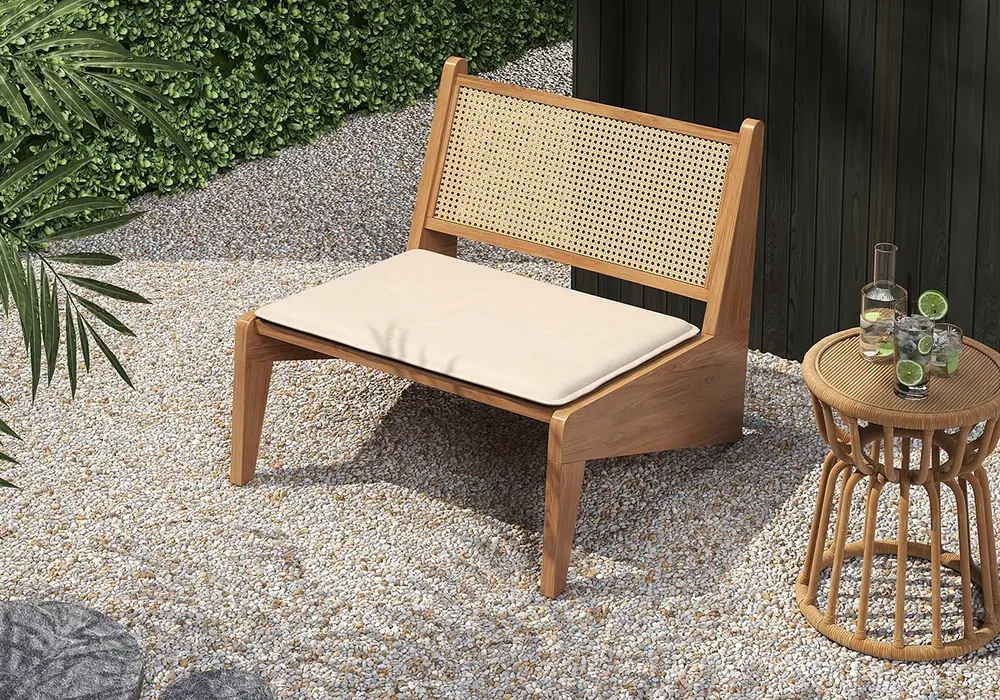
A pick that matches: the Boho PE rattan chair
If you want a single piece that fits this advice, the Boho patio chair pairs PE rattan with a rust-resistant aluminum alloy frame and removable cushions.
Can Wicker Furniture Handle Rain, Sun, Cold and Salt Air?
Resin wicker tolerates rain and sun well, but "all-weather" does not mean indestructible. How a set performs depends on your climate.
Climate | Main risk | What to do |
Hot and humid, or tropical | Mold, mildew and standing water | Choose quick-dry cushions and frames with drain holes, and keep air moving around the set |
Strong sun, or arid | UV fading and brittle strands | Choose UV-stabilized HDPE, and add shade or a cover when the set is not in use |
Cold, with freeze-thaw cycles | Low-grade plastic turns brittle and cracks, and snow weighs on the weave | Store or cover the set in deep winter and keep snow off it |
Coastal and windy | Salt air attacks metal frames, and light pieces blow around | Choose aluminum or stainless steel, rinse off salt, and weight or anchor light sets |
Where to place it
- Open exposure (rain and full sun): all-weather resin wicker only.
- Covered veranda or screened porch: more flexibility, although natural wicker still suffers in damp air.
- Seasonal use: store the set and cushions in the off-season, or use breathable covers.
What "all-weather" really covers
Makers use the term for the resin weave and coated frame. It rarely covers cushions left wet or a set buried under snow. Listings often say "weather-resistant" or "UV resistant" without test details. Treat those words as a starting point and read the warranty for what is excluded.
How to Keep Outdoor Wicker Looking Good: Cleaning, Storage and Cushion Care
Good care adds years to a set, and most of it is simple. Resin wicker needs gentle cleaning, dry cushions and protection from standing water and snow.
Cleaning
Use a soft brush, mild soapy water and a clear rinse. Avoid pressure washers, bleach and stiff brushes, which can scratch resin and dull its finish. Clean the underside of the seat too, where dirt and damp collect.
Cushions
Cushions cause most mildew problems, so they deserve the most attention.
- Fabric: solution-dyed acrylic or weather-resistant polyester resists fading and moisture best.
- Foam: quick-dry foam and open seat bases let water drain out instead of sitting inside.
- Removability: covers or cushions that come off make washing easy.
- Storage: keep cushions dry when not in use, in a deck box or indoors.
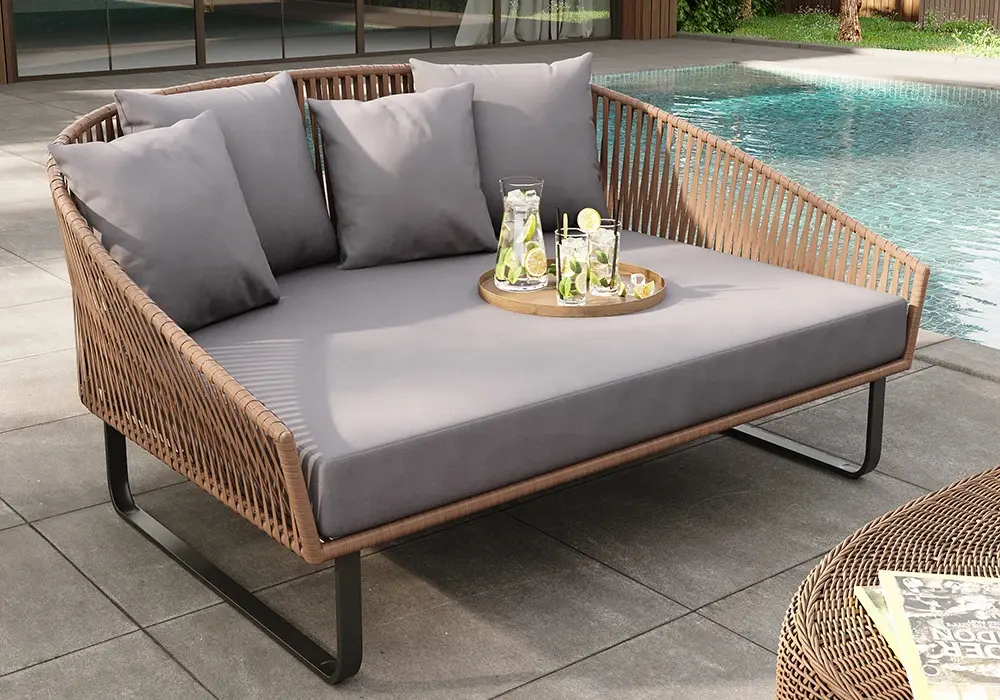
If you want cushions that come off for washing, the 63-inch rattan daybed suits a poolside, garden or patio lounging spot. It has an aluminum frame, plush cushions with matching pillows and removable, machine-washable polyester covers.
Seasonal routine
Season | Task |
Spring | Deep clean the weave and cushions, and check the frame and fittings |
Summer | Wipe down regularly and provide shade |
Autumn | Check for loose weave and tighten fittings |
Winter | Store the set, or use a breathable cover in cold regions |
What to avoid
Do not leave resin wicker standing in water or under heavy snow. Natural wicker is even less forgiving of damp, so keep it dry at all times.
Is Outdoor Wicker Worth It? Pros, Cons and Cost
Quality resin wicker is worth buying when comfort and looks matter and you choose the weave and frame carefully. Cheap sets are where most disappointments come from.
Pros
- Comfortable and attractive, with a warm, textured look.
- Lightweight and easy to rearrange.
- Available in many styles, from loungers and daybeds to dining chairs.
Cons
- Cheap sets can fade, crack or unravel.
- Light pieces can blow around in strong wind.
- Cushions need ongoing care.
Cost per year of use
A low-cost PVC set at US$800 that lasts 3 years costs about US$267 a year. A quality HDPE-on-aluminum set at US$2,000 that lasts 10 years costs about US$200 a year. These figures are illustrative, but the logic holds in any currency: the cheaper set is not always the cheaper choice.
How wicker compares with other materials
- Teak: very durable and premium-priced, but it needs periodic oiling and feels firmer.
- Aluminum (no weave): light and rust-proof, but sleeker and less cozy.
- Steel: sturdy and affordable, but it rusts once the coating fails.
Resin wicker wins on comfort and style. Aluminum and teak win on pure longevity.
FAQ
Can wicker furniture be left outside all year?
Resin wicker on an aluminum frame usually can in mild climates. In snowy or freezing regions, cover or store it for winter. Natural wicker should not stay outside.
How long does outdoor wicker furniture last?
Roughly 1–3 years for uncovered natural wicker, 2–5 for cheap PVC on steel, and 7–15 for quality HDPE on aluminum with good care.
Is HDPE wicker better than PVC wicker?
Generally yes for outdoor use. HDPE is more UV-stable and flexible, while PVC tends to stiffen and crack over time.
How do you prevent mold and mildew on outdoor wicker?
Use quick-dry cushions, store them dry when not in use, clean with mild soap, and make sure water can drain and air can circulate.
Should outdoor wicker be covered or stored in winter?
In cold or snowy regions, yes. Bring cushions indoors and use a breathable cover or store the set. In mild climates, covers are optional.
Is wicker better than teak or aluminum furniture?
It depends on your priorities. Resin wicker wins on comfort and style, while aluminum and teak usually win on pure longevity.