

A water-resistant outdoor sofa can make a patio, deck, balcony, or garden feel like an extension of your living room. But choosing the right one involves more than picking a sofa labeled “outdoor.” Rain, humidity, UV exposure, stains, pets, and seasonal temperature changes can all affect how well an outdoor sofa performs over time.
The key is to look at the complete construction rather than one marketing claim. The fabric, frame, cushion filling, seams, and drainage system all contribute to weather resistance. Your local climate and available space matter just as much.
This guide explains what to look for when shopping for a water-resistant outdoor sofa, including material selection, sizing, maintenance, storage, assembly, and warranty considerations. By evaluating each factor together, you can choose outdoor seating that stays comfortable, attractive, and practical through changing weather.
Table of Contents
Water-Resistant vs. Waterproof: What Outdoor Sofa Shoppers Need to Know
One of the most important things to understand when shopping for outdoor furniture is that water-resistant and waterproof are not the same thing.
A water-resistant outdoor sofa is designed to repel or slow the penetration of water. It can usually handle light rain, humidity, morning dew, and occasional spills without immediately becoming saturated. However, prolonged exposure to heavy rain or standing water can eventually push moisture through the fabric, seams, or cushion construction.
A waterproof product, by comparison, is designed to prevent water from passing through under defined conditions. Even then, an entire sofa is rarely completely waterproof because seams, zippers, joints, and drainage openings can create potential entry points.
What Are the Best Water-Resistant Outdoor Sofa Fabrics?
Common choices include:
Fabric | Main Advantages | Best Use |
Solution-dyed acrylic | Excellent color retention, water resistance, durable | Sunny patios and premium outdoor seating |
Olefin | Moisture resistant, lightweight, relatively easy to clean | Humid climates and everyday use |
Treated polyester | Affordable, versatile, available in many designs | Covered patios and moderate weather |
Standard indoor fabric | Comfortable but usually lacks outdoor protection | Indoor use only |
Solution-dyed acrylic is often a strong choice for exposed patios because the color is integrated into the fiber rather than applied only to the surface. This can improve resistance to fading from repeated UV exposure.
Olefin is another practical option, particularly for homeowners looking for moisture resistance and easier everyday care. Polyester can also perform well when it has been specifically treated for outdoor use.
Look Beyond the Fabric Label
Fabric alone does not determine whether an outdoor sofa can handle rain.
Check the following details before buying:
- Water-repellent treatment: A surface treatment can help rain bead rather than immediately soak into the fabric.
- Seam construction: Poorly protected seams can allow water into the cushion even when the fabric itself is highly water resistant.
- Cushion design: Sloped or structured cushions can encourage water to run off rather than pool.
- Drainage: Breathable materials or drainage points can reduce drying time.
- Cushion covers: Removable covers are easier to clean, dry, or replace.
There is no universal “water-resistant rating” that applies to every outdoor sofa in the same way. Instead of relying on vague terms such as “weatherproof,” look for specific information about fabric construction, water-repellent treatments, seams, drainage, and intended exposure level.
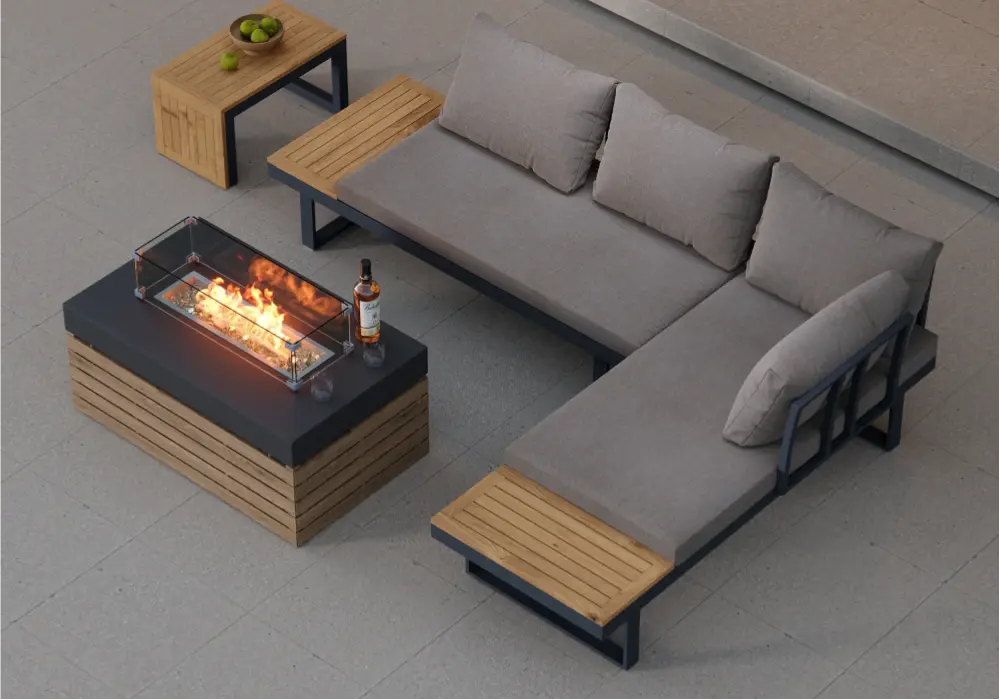
For example, the 4-Piece Modular L-Shaped Teak Sectional Outdoor Sofa Set with Fire Pit pairs waterproof polyester upholstery with stain- and spill-resistant cushions, while its aluminum-alloy frame is designed for outdoor use. It illustrates why shoppers should evaluate the cushion and frame construction alongside the fabric label rather than judging weather resistance from one feature alone.
Best Outdoor Sofa Materials for Sun, Rain, and Humidity
A durable outdoor sofa needs more than a weather-resistant cover. The frame and cushion system must also cope with UV exposure, moisture, temperature changes, and repeated use.
Which Outdoor Sofa Frame Materials Resist Rust Best?
Aluminum is one of the most practical frame materials for outdoor sofas. It is lightweight, naturally corrosion resistant, and easy to move when rearranging a patio or preparing for a storm.
Stainless steel provides greater structural strength and can offer strong corrosion resistance, especially when an appropriate stainless grade is used. It can be a good option for coastal or humid environments, although it is typically heavier and may cost more.
Galvanized steel has a zinc coating designed to protect steel from corrosion. It can offer a good balance of strength and cost, but damaged or worn areas of the protective coating may eventually become vulnerable to rust.
Powder-coated steel adds a protective finish over the metal surface. Its performance depends heavily on coating quality and whether scratches or chips are repaired promptly.
For coastal locations, pay particular attention to salt exposure. Materials and finishes that tolerate ordinary rain may not perform equally well in salty air.
What About Wood and Synthetic Wood?
Teak is popular for outdoor furniture because of its natural oils and dense structure. It can perform well in wet conditions, although it still benefits from regular cleaning and appropriate maintenance.
Synthetic wood or resin alternatives can reduce maintenance and provide a wood-like appearance without some of the upkeep associated with natural timber.
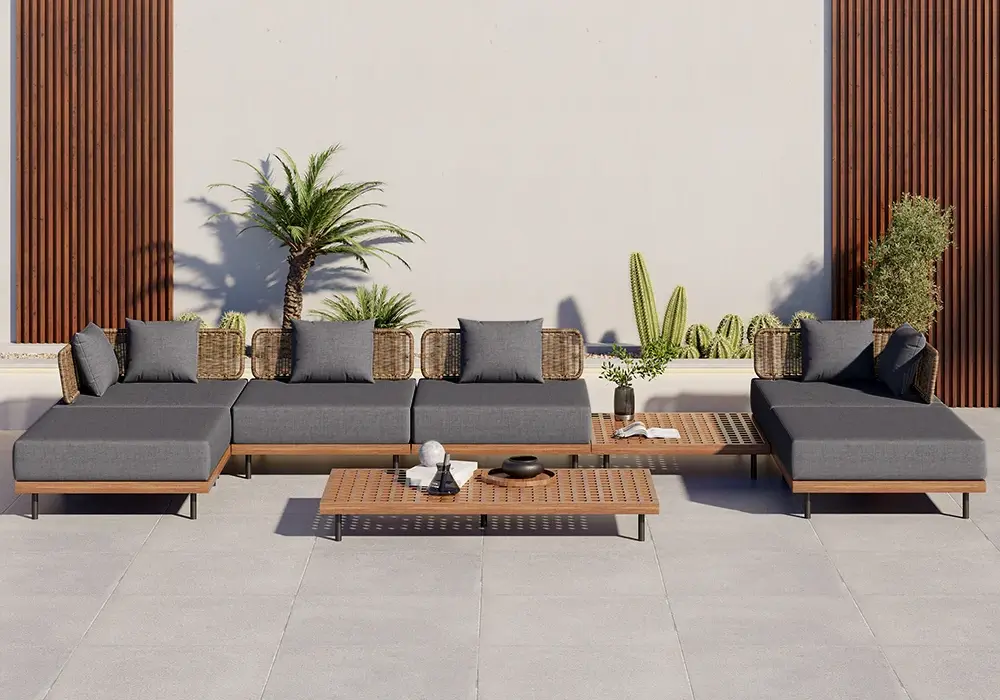
A good example is the 8-Piece Teak and Aluminum Rattan Outdoor Sectional Sofa Set with Coffee Table. It combines teak with a lightweight aluminum frame and handwoven PE rattan. The manufacturer also describes its cushions as water-, stain-, and fade-resistant, with removable covers that can be cleaned or spot-treated.
Why Cushion Construction Matters
An outdoor sofa cushion should be designed to dry quickly, not simply repel water on the surface.
Look for:
- Quick-dry foam or other moisture-managing cushion filling
- Breathable or mesh-like underside materials
- Drainage openings
- Covers that can be removed for cleaning
- Cushion designs that reduce water pooling
This matters especially in humid climates. A cushion that stays wet internally for a long time creates a more favorable environment for mildew and unpleasant odors.
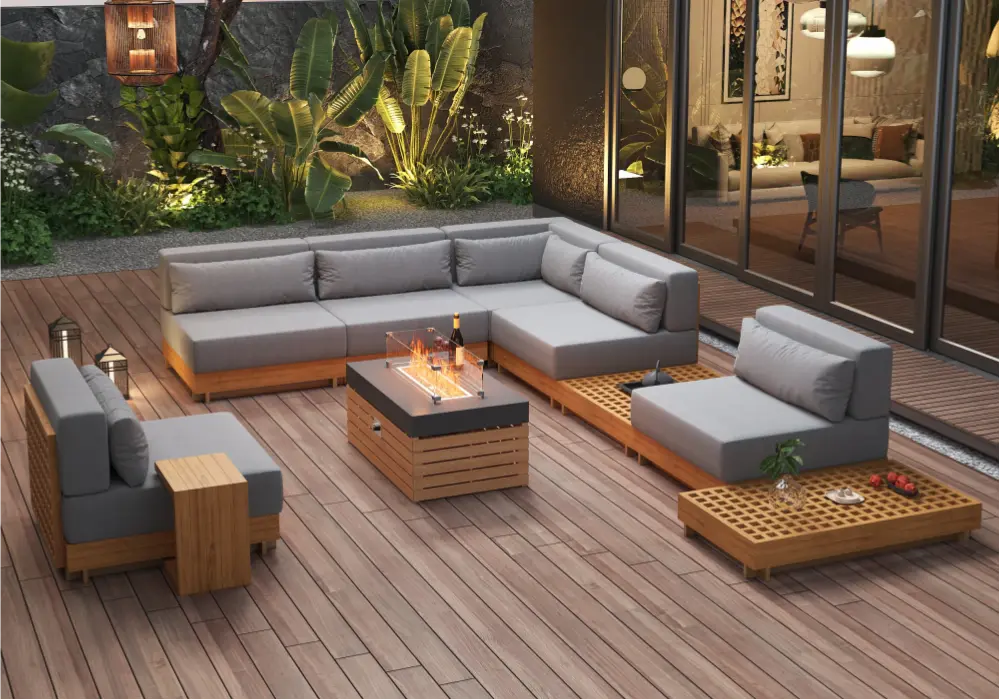
The Grida 10-Piece Premium Teak Modular L-Shaped Outdoor Sofa Set with Fire Pit is another example of a material-focused outdoor configuration. It uses a teak frame, thick waterproof polyester cushions, and a modular design, combining moisture-conscious construction with flexible outdoor entertaining.
A useful way to think about outdoor durability is:
Weather resistance = fabric + frame + cushion filling + drainage + maintenance
A premium fabric cannot compensate for a frame that corrodes easily or a cushion that traps water.
How to Choose Outdoor Sofa Size and Layout for Your Space
Even the best outdoor sofa will be frustrating if it does not fit the space comfortably. Before shopping, measure the entire area rather than guessing based on visual proportions.
Step 1: Measure the Usable Space
Record the:
- Total length and width of the patio, deck, or balcony
- Location of doors, railings, columns, planters, and steps
- Areas exposed to direct sun or rain
- Clear route required to bring the sofa into the space
- Space needed for side tables, coffee tables, or ottomans
Do not measure only the empty floor area. Consider how people will actually move around the furniture.
Step 2: Compare Sofa Width, Depth, and Seat Height
A typical outdoor sofa may range from compact two-seat designs to large modular configurations.
For comfort, a seat depth of around 24 to 28 inches is a useful starting range for many adults. Deeper seating can feel more relaxed and lounge-like, while shallower seating can make a compact balcony easier to navigate.
Seat height also matters. Lower seats can create a casual, lounging feel, while higher seats may be easier for people who prefer simpler sit-to-stand movement.
Space | Practical Sofa Approach | Layout Tip |
Small balcony | Compact loveseat or armless modular sofa | Keep furniture shallow and visually light |
Medium patio | 2–3 seat sofa | Add one small table or ottoman |
Large deck | Three-seat or modular sofa | Create zones for lounging and dining |
Irregular space | Modular sectional | Rearrange pieces around corners and obstacles |
Modularity becomes particularly useful as the space gets larger or less conventional. The Grida 10-piece teak sectional, for instance, is designed for multiple configurations, making it more adaptable to changing patio layouts or larger entertaining areas.
Step 3: Leave Enough Walking Space
As a general planning principle, try to maintain a clear walking path of roughly 30–36 inches where people regularly pass. High-traffic areas may benefit from even more clearance.
For small balconies, an outdoor loveseat with a narrow frame may work better than a deep sectional. A movable ottoman can also provide flexible seating without permanently taking up as much floor area.
Before ordering, tape the sofa's approximate footprint onto the floor with painter's tape. This simple test can reveal whether the sofa, coffee table, and walking paths can coexist comfortably.
How to Clean and Protect Outdoor Sofa Fabric
Routine care is one of the easiest ways to extend the useful life of a water-resistant outdoor sofa.
Create a Simple Cleaning Routine
For most outdoor fabrics, start with regular light cleaning rather than waiting for dirt to build up.
A practical routine is:
- Brush or remove loose debris weekly or as needed.
- Spot-clean spills as soon as possible.
- Use mild soap and clean water for general washing when recommended by the manufacturer.
- Work with a soft brush or cloth rather than an abrasive tool.
- Rinse thoroughly to remove soap residue.
- Allow cushions to air dry completely.
Always read the manufacturer's care label first because treatments and fabric constructions differ.
Avoid aggressive cleaners or unapproved bleach solutions unless the manufacturer specifically says they are safe. Harsh chemicals can weaken fibers, damage finishes, or change the appearance of dyed fabrics.
How to Handle Stains
For food, mud, or drink spills, remove solid material first, blot excess liquid, and then use a mild soapy solution.
Do not aggressively rub a stain deep into the fabric. Gentle brushing is often more effective than hard scrubbing.
For grease or sunscreen marks, use a cleaning method specifically approved for the fabric. Outdoor upholstery may be durable, but “durable” does not mean immune to chemical damage.
Stain Protection vs. Pet-Proofing
Homes with dogs or cats may need a different fabric strategy.
Look for tightly woven materials that reduce the chance of claws catching the surface. Solution-dyed fibers can also be attractive for pet owners because they tend to provide good color durability.
Removable covers are especially useful for families with frequent spills or pets. The 8-piece teak, aluminum, and rattan set mentioned above uses removable cushion covers, giving owners a practical way to wipe or spot-treat the upholstery as part of regular maintenance.
There is, however, a trade-off. Some heavily treated stain-resistant fabrics may feel less soft or natural than untreated upholstery. The best choice depends on whether your priority is maximum softness, stain resistance, or claw resistance.
Before purchasing, also confirm whether the manufacturer sells individual replacement covers and how long replacement parts are expected to remain available.
Outdoor Sofa Covers, Storage, Assembly, and Warranty Tips
Long-term performance depends heavily on what happens when the weather becomes severe.
Should You Cover Your Outdoor Sofa?
A well-fitted outdoor cover can reduce exposure to:
- Heavy rain
- Bird droppings
- Dirt and pollen
- Snow and ice
- UV radiation
- Falling leaves
Choose a cover made for outdoor furniture that is water resistant but breathable. A completely sealed cover can trap moisture underneath, which may encourage mildew.
Do not cover a wet sofa and assume the moisture will disappear. Allow cushions and upholstery to dry properly first whenever possible.
Winter Storage Strategy
Your best storage method depends on the climate.
Climate | Recommended Approach |
Mild winter, occasional rain | Use a breathable fitted cover and inspect regularly |
Cold, snowy winter | Move cushions indoors and cover or store the frame |
High humidity | Prioritize ventilation and complete drying |
Severe storms | Move lightweight furniture indoors or into a garage when practical |
Elevating the sofa slightly from persistently wet ground can also improve airflow and reduce contact with standing water.
Evaluate Assembly Before You Buy
Large modular sofas can look simple online but still require significant assembly.
Check:
- Whether tools are included
- How many people are recommended for assembly
- Whether modules need to be connected
- Whether cushions arrive compressed
- Whether the product can fit through doors, elevators, and stairways
For fire-pit sectionals, also check the fuel connection requirements before purchase. For example, both Homary fire-pit sofa configurations include a propane hose adapter, while the product information specifies that the propane tank must be connected outside the fire pit and that a tank cover is not included.
Read the Warranty and Return Policy Carefully
Before paying, confirm exactly what the warranty covers.
What to Check | Why It Matters |
Frame warranty | Indicates expected structural durability |
Rust/corrosion coverage | Important for wet or coastal environments |
Fabric fading coverage | Useful for high-UV locations |
Cushion coverage | Helps with defects or premature deterioration |
Replacement parts | Reduces long-term repair costs |
Return shipping | Large furniture can be expensive to send back |
Weather-related exclusions | Clarifies what “outdoor use” actually means |
Do not assume that a general outdoor-furniture warranty covers every type of weather damage. Some policies exclude fading, mildew, standing water, improper storage, or normal wear.
Also check whether a rain cover is included or sold separately. The purchase price of the sofa may not represent the total cost of ownership.
How to Choose the Right Water-Resistant Outdoor Sofa
The right water-resistant outdoor sofa is not necessarily the one with the strongest “weatherproof” claim. It is the one whose materials and construction match your climate, space, and household needs.
Start by identifying your local weather conditions. A sunny, dry patio has different priorities from a humid coastal balcony. Then measure the usable space, select a practical sofa depth and configuration, and evaluate frame, fabric, cushion, and drainage construction together.
For example, a smaller modular fire-pit sectional can combine flexible seating with weather-focused materials, while a larger premium teak configuration may make more sense when entertaining and layout flexibility are priorities. A mixed-material teak, aluminum, and rattan sectional can be a practical middle ground for homeowners who want modular seating, lighter framing, and removable, weather-resistant cushions.
For easier ownership, favor removable covers, quick-dry cushion systems, corrosion-resistant frames, and replacement parts that are readily available. A breathable protective cover and simple cleaning routine can further reduce long-term wear.
Before purchasing, use a simple decision checklist: climate → space → fabric → frame → cushion → maintenance → storage → warranty.
Once those factors are clear, comparing models becomes much easier. A measurement sheet or side-by-side product comparison can help narrow the options without sacrificing the features that matter most.
FAQ
What is the difference between water-resistant and waterproof outdoor sofas?
A water-resistant outdoor sofa can repel or delay water penetration, making it suitable for light rain, splashes, and humidity. Waterproof construction is designed to prevent water penetration more completely under specific conditions. In practice, seams, zippers, drainage openings, and cushion construction still affect overall performance.
Which frame materials resist rust best for outdoor sofas in humid or coastal climates?
Aluminum and appropriately selected stainless steel are strong choices for humid conditions. Galvanized or coated steel can also work well when the protective coating remains intact. In coastal areas, salt exposure should be considered because it can accelerate corrosion.
How do I clean quick-dry outdoor sofa cushions without damaging the fabric?
Start by checking the care label. Remove loose debris, use mild soap and water when approved, gently brush or wipe the surface, rinse thoroughly, and let the cushions dry completely. Avoid harsh chemicals, aggressive scrubbing, and direct high heat unless specifically permitted by the manufacturer.
How do I prevent an outdoor sofa from fading or developing mildew in direct sun and rain?
Choose UV-resistant outdoor fabric, preferably a colorfast option such as solution-dyed acrylic. Improve airflow around the sofa, avoid leaving cushions wet for extended periods, clean debris regularly, and use a breathable cover during prolonged bad weather. Complete drying is especially important in humid climates.
What seat depth is considered comfortable for an outdoor sofa?
A seat depth of about 24 to 28 inches is a useful general range for comfortable outdoor seating. Shallower seats may suit compact spaces, while deeper seats are often better for lounging. Personal preference, cushion thickness, and seat height should also be considered.
Are there outdoor sofa fabrics that hold up to pet claws and stains?
Yes. Tightly woven outdoor fabrics can reduce snagging from claws, while solution-dyed fibers can offer strong color durability. For homes with pets, look for removable covers and confirm whether replacement covers are available. Fabric selection should balance claw resistance, stain resistance, texture, and ease of cleaning.
Should I cover or store my outdoor sofa during winter?
In mild climates, a breathable fitted cover may be enough when the sofa is not being used. In cold, wet, or snowy climates, it is usually better to move removable cushions indoors and protect the frame from prolonged exposure. Always make sure the sofa is dry before covering or storing it.